

An Interview with Onyx Visual Effects Supervisors John Weckworth and Evan Underwood
We discuss their upbringings, the evolution of VFX, the impacts of AI on the industry, their experiences working on the hit show “Paradise,” their advice for those trying to make it, and so much more!


At some point in your life, you’ve probably heard the term “Computer Generated Images” or “CGI” for short. For any type of content out there, these visual effects are essential to bringing all the most flashy, entertaining components of a story to life. After all, as far as I’m aware, fire-breathing dragons are not real, so they have to make it onto the screen somehow.
But how much do you actually know about the making of these magical effects that bring many of your favorite universes to life? When you peel back the curtain to find out, you come to realize that it is an incredibly intricate, detail-oriented process from start to finish. So much thought goes into how to make all the unbelievable action on your screen feel as believable as possible.
Which is why I am excited to talk to John Weckworth and Evan Underwood, who both work as Visual Effects Supervisors at Onyx VFX, a studio which is built by artists, and driven by production realities to deliver creative solutions for complex problems. Combining exceptional talent, cloud technology, and production-proven workflows to deliver seamless visual effects at any scale, the studio has worked on many high profile projects, including “IT: Welcome to Derry,” “Spirited,” “Paradise,” “Babylon” amongst countless others.
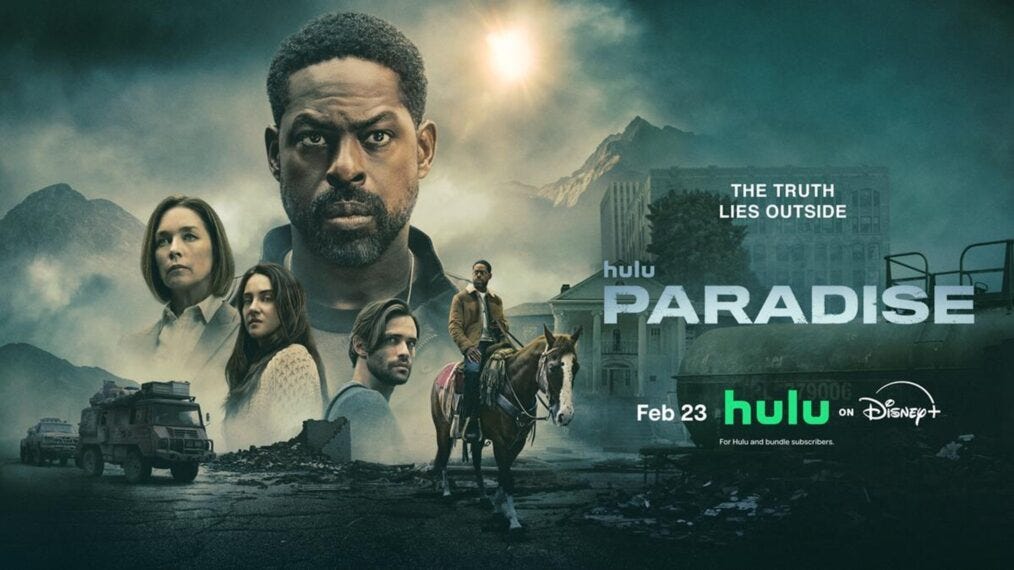
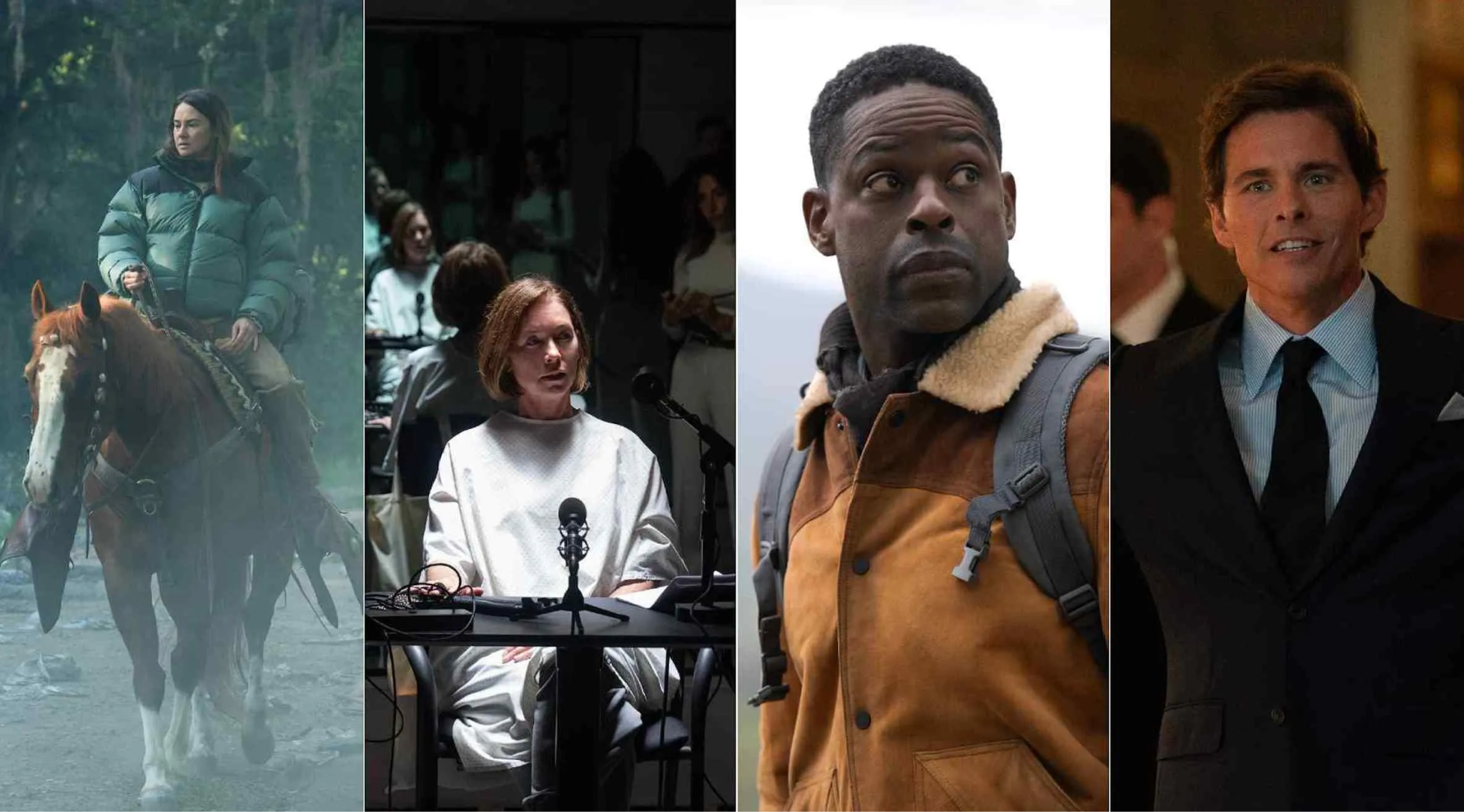
Both John and Evan were gracious enough to offer up their time to speak to me. They spent time working on the hit TV Show “Paradise” starring Sterling K. Brown, James Marsden, Julianne Nicholson, and Shailene Woodley.
The story is set in an underground bunker in Colorado three years after a doomsday event. This political sci-fi thriller follows Secret Service Agent Xavier Collins. When the former US President is mysteriously murdered, Xavier becomes the prime suspect. As he investigates, he uncovers deep conspiracies about the society’s true leaders and discovers that the outside world may still have survivors.
From a viewership perspective, the Season 2 finale of Hulu and Disney+’s Paradise reached 4.3 million global views in its first three days of streaming, a 35% increase from the season premiere. Additionally, the show hit a series high of 950 million minutes viewed across all episodes.
Let’s introduce you to these two esteemed individuals one at a time.
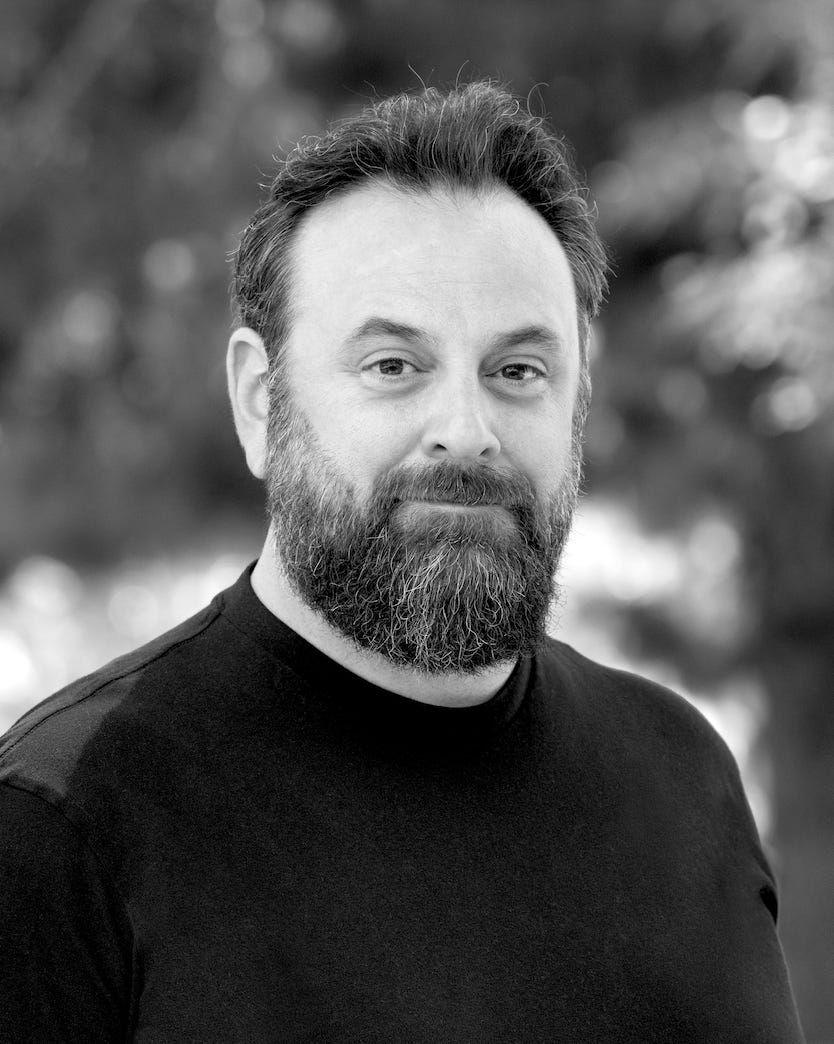
John Weckworth is a Visual Effects Supervisor at Onyx VFX with more than 20 years of experience bringing ambitious creative visions to life across film and television productions.

Evan Underwood is the CG Supervisor at Onyx VFX, with extensive experience supervising visual effects on acclaimed series including “1923,” “The Continental,” “The Sympathizer,” “Outer Banks,” “Agents of S.H.I.E.L.D.,” and “Paradise” Seasons 1 & 2.
Both John and Evan provided very thoughtful insights on their line of work, which helped give me a much more thorough understanding of the field of VFX. I hope you take away as much from this conversation as I did.
Without further ado, let’s get to this interview!
What inspired you both to get into visual effects?
John: I touched on this with someone I was talking to the other day. In a nutshell, I feel like I grew up in the golden age of home video.
Right when I was getting out of the kid stuff, like cartoons, and getting into stuff that young teenagers like to watch, they opened up the first mom-and-pop VHS store down the street from where I lived. Anything that looked sci-fi or monster-oriented, I rented them all.
When I got older, more into the high school age range, that’s when the DVDs came out. With that, we got all that behind-the-scenes stuff, like the special bonus features. I watched literally everything I could get my hands on for that. I was always interested in the stuff that was a little more fantastical, like the monster makeup.
But when things kind of started getting into the more digital revolution, when I would watch “Jurassic Park” or “The Matrix,” I was like, “how did they do all of that?”
That fascination led me to go to school for art. There, one of my teachers started a class that was about time-based digital media, which involved moving things around on the computer. I thought it was super cool. So, I just kind of built from there, did the best I could in college, and tried to get something that was halfway presentable to somebody. I went out, started taking on small jobs, and hoped they would lead to bigger ones. I was fortunate enough to meet great people along the way, and slowly but surely clawed my way to where I wanted to be.
Evan: For me, I would say there were two big films, the first one being “Toy Story.” It’s kind of cliché, but it hit me… I think Toy Story came out in 1995, and so when I was 8 or 9 years old, I was just obsessed with Buzz Lightyear. I love to draw, so I would sit in my room for six or seven hours and do full drawings, and it was always of characters. I didn’t do landscapes.
It was always characters from all over the place. I would draw Buzz Lightyear, of course, and then I would try to paint him, and then nine- or ten-year-old me was like, “I can’t get that 3D feel to it.”
So, I started looking into computer programs and whatnot. I never really had the means to get into 3D Studio Max or Maya, just because you had to pay for them. But I was just always very, very curious about it. I would read about how to create 3D regularly.
It’s funny, I actually remembered in gym class that year, we got to pick our locker numbers. I thought I was the coolest kid because I picked 3D. Nobody else cared. Nobody else thought it was cool at all. Apparently, nobody loved 3D. But I thought it was awesome.
John mentioned “The Matrix.” That was really the movie that got me into the visual effects side of things, or at least got me interested in stuff outside of the full animated Pixar, DreamWorks, “Toy Story” type of visuals. When I saw the bullet time, I thought it was the coolest thing I had ever seen in my life. Then I really asked myself, “okay, how can I get into the movie industry and make things like this and build worlds and environments?”
I was just so affected by those movies. It really transported me to a different place, and I really thought that the things that they generated on the computer had a huge impact and made those environments what they were. So, I just wanted to be part of that.
What would you say are some of the biggest advancements you’ve seen working in visual effects over the years?
Evan: I’ll start with the advancements and just the sheer amount of power we have on our computers these days.
Even things from five or six years ago, we couldn’t really do with ease. You had to find workarounds or cheats to do them in terms of polycount.
In case you don’t know: the polycount is how many polygons a certain object or environment is built with.
Let’s think about it in terms of common objects. A single tree might have five million polygons. So then, if you want to make a forest, it’s five million times a million trees, which seems impossibly large.
However, computer power has gotten so much larger every year, to the point where it’s now exponentially more powerful. But then we also have the tools that have been created to handle massive-scale scenes, and some of them are cheats.
For instance, when you’re working in your viewport with proxy objects that represent millions of polygons, but you’re only seeing ten. Then, during render time, it can handle it because it’s a different system.
So, yeah, my main answer would just be sheer power and capability, to the point where these days you’re not bogged down by the technical aspects of wondering whether you could handle it. Because that was definitely an issue for the longest time.
John: Yeah, just to kind of piggyback off that too: when I got my start, and I think maybe for Evan too, we had the first wave of desktop computer artists. Prior to that, there were Flame and Henry, and all these extremely expensive systems that cost hundreds of thousands of dollars. Even if you wanted to rent them, it would cost hundreds of thousands of dollars a day.
Then, when I was getting out of school, things like Shake dropped, which was compositing software from Apple. At that point, if you had an Apple computer, you could run the software that they were using to make “The Lord of the Rings.”
I remember at the time, one of the manuals where everybody was learning Shake came with bonus footage from “The Lord of the Rings” that you could use and composite with the real deal stuff. It made everything seem really doable at that point. It’s like when people hear stuff from musicians, when they listen to The Clash, they’re like, “oh, well, I could do that. Maybe not that well, but I can play three chords and scream.” It’s the same thing, just with computer animation.
When it comes to those tools, I don’t know if they’ve gotten a lot cheaper, but they’ve definitely gotten a lot more powerful. Like Evan was saying, here’s a whole ecosystem around visual effects: people are building amazing plugins for these things, and if you want to learn something, you can just go to YouTube, plug it in, and there’s somebody somewhere around the world that’s going to give you a tutorial that’s going to blow your mind. I think a lot of these people who are making these tutorials would probably be blown away by the artists who are getting inspiration from their how-to content.
They probably don’t think that the guy working on some big tentpole film is literally going, “oh man, how do I do this? I better check out this video….” But that’s the way it goes these days.
This isn’t a technology-related issue, but I think this is something that’s pushed things way further. It’s the quality of the imagery coming out at almost every point. The imagery in commercials is amazing now. The imagery in television is amazing. The imagery in feature films has gotten unbelievable. I went to see the newest Avatar movie, and it was the first time I had a visceral response to a CGI character. I mean, obviously, I’ve seen a lot of CGI characters. But this just felt so real. I felt like they were in peril, and that I needed to jump into the screen and save them.
It’s gotten to that point where we can create anything at this point. But I think what really drives it is the audience. They’re so used to seeing things that look great. These days, you cannot cheap out. You cannot take the easy road out. It must look great, or else the audience is gonna balk. Back then, if you told the greatest story in the world, people used to give you a little bit of a gimme for some of the visual effects. Gimmes don’t exist anymore. It all must be at a certain level, or else you’re not even playing the game.
What’s something that viewers don’t know about visual effects that you wish they knew about, or things you would like them to know about visual effects?
Evan: Something that jumps out for me is this: when people hear visual effects, they always think of the big effect. The big explosion, or the big dragon. But… ninety percent of visual effects are not meant to be noticed.
Over the years, I would be working on shows, and people would be like, “oh, I didn’t know there were visual effects in that show.”
And I’m like, “yeah, there’s about a thousand shots with visual effects in them, but they’re all on the lower end: bread and butter clean up shots, replacing the background, removing the wire and whatnot.” But that is a major part.
It’s one of the biggest parts of visual effects, but it’s just not as glamorous. The glamorous parts are the big in-your-face things where people are like, “clearly they didn’t film that visual effect”. Of course, we love to work on those, but a lot of times, what keeps the lights on is all the smaller stuff that you’re not supposed to see.
If you see it, we didn’t do our job right. Everybody in the industry obviously knows that, but people outside typically wouldn’t know that or think about that.
John: Even when you work on a romantic comedy feature these days, there are 1200 visual effects shots. It makes me laugh when people are like, “oh, I can always tell when there’s CG.”
Except that you can’t… Because 99% of it goes completely unnoticed to you. If I showed you where the seams were, you would know. But it takes years of experience to pick up on that stuff.
But another thing I think would be good for people to know is, especially since we’re transitioning into this world of AI and things like that, that CGI and AI are two completely different things.
People think that when it comes to visual effects, it’s just a computer where there’s a button you press, and your work comes out the other end. All this stuff is meticulously made by technicians and artists.
When you go on a set, there’s a certain amount of people who do different jobs. There’s almost a mirror image of those people in visual effects. There are people who are building sets. There are people who are building sets in CG as well. There are people who are lighting sets on a real set, then there are people who are lighting the digital sets. There is human interaction that goes into CGI that I don’t think people really realize. The computer makes it possible. There’s no doubt that the computer enables us to do the craft that we do.
But technology does nothing without the artists. You can’t just get somebody who doesn’t know anything, give them the software, and be like, “okay, give me something great.” You need to have artists with thousands of hours of experience to get that kind of output.
I make the analogy all the time: it’s like a pirate ship, where everybody has different roles they play on the boat. We’re all going to the same place, but some people are CG people, compositors, lighters, animators, or render wranglers. There are all these different tasks that kind of go into the final goal.
But at the end of the day, it’s really about the people. Sometimes people think our work is kind of cold or robotic, or something like that. But I think if they could see how it was made, their pre-conceived notions would be shattered.
The artists, their perspectives, and many of these people have thousands of hours of experience. A lot of it’s before they’ve even got a professional gig. They just did it on their computers for fun. You just have to learn it somewhere.
Some people go to schools for it, but I’d say most of the people that I know go to school for either art or something in that general area, but a lot of their learning is just them sitting at their computer by themselves, just wanting to learn how to make cool stuff. Eventually, that leads to a career in making something in visual effects or CGI if they stick with it.
But I hear a lot in interviews from people kind of downplaying CGI because they don’t understand all the artistry involved. And I think if people knew how many artists go into it, they’d be more curious about it, and not think it just comes out of some magical button on the computer. On the other side of your favorite CGI effects, there’s like forty or fifty people that all have their input and their artistry stamped on every frame of what’s coming out of it.
Evan: I’ll jump on that a little bit because John mentioned AI.
Let’s say we’re creating something on a large scale in CGI. You can get a good-looking iteration of that relatively quickly. Like, you can get to that 7.5 out of 10 mark quickly. But if you put that in a show or a movie, it’s not gonna pass. If it looks pretty good, but it’s not realistic, then it’s not completely realistic. It’ll completely bump or jar the audience.
With AI, there is something to be said about that as well. You can click that button, you can generate stuff, and you can get a pretty good-looking model.
But the true artistry is that last 25%, sometimes that last 10%. If you don’t get all the way to that 100% mark, it’s gonna bump, it’s not going to look good, and now audiences are talking about that over everything else. All the experience is packed into the last hurdle to get it over the finish line. That’s the hardest part. That’s where all the years of experience come in. We’re always asking, “what’s that finishing touch that is missing that takes it to the photo-real mark?”
With AI, that’s what I think is lacking. As of now, I feel at least confident as an artist that we’ve got that over it so far.
What have been some of your favorite projects you’ve had the opportunity to work on, and why?
John: The show “Paradise” comes to mind right away, because this is what we’re in right now. We’re on our third season. It hasn’t just been a job. We’ve been living this show for almost three years now. Since we started working on it, there’s been maybe a couple of weeks off here or there. So we’ve been in it. But the project is a dream gig, because we have a little bit of everything. I can’t go into any detail about the recent season we’re working on now. But in season one and season two, we’re doing a lot of world-building, which, for visual effects artists, is always fun to build your own space to play around with.
We have everything from plane crashes to explosions to everything in between. It’s one of those things where we don’t really know where things are going until we get a script. So, when the script drops and you get it in your email and start reading it, you’re like, “this is going to be fun” because it’s a menu of all the cool things we get to do throughout the season.
It’s a great job to have at a great time. There’s not a whole lot of stuff shooting right now. So we’re fortunate to have such a great project that’s shooting in LA. We’re all locals here. Everything is shot in LA; we’re posting in L.A. Everything is here. It feels like the good old days.
I remember when we had the first concept meeting for the first season. Everybody was just so happy to be there and energized by a cool project happening right in our backyard. So, you know, “Paradise” has been a great one.
Evan: I’ll give you two, because I agree. I would say “Paradise” is my favorite show that I’ve worked on, for the reasons John mentioned. I feel like this particular show, the clients have been so great to work with. They’ve given us a lot of room to play to the point where we really have a stamp on the look, and sometimes even the pacing of a VFX shot, or a sequence at times. We have just much more of a say in what these are gonna look like, especially with John being on the production side and vendor side. He has a lot of say, because he’s talking with directors and sometimes showrunners.
That trickles down to me as a CG Supervisor. I can pitch my ideas and suggestions, and sometimes that gets in the final edit. So that’s been awesome.
I’ll go back a little earlier in my career for this question as well. I worked on one of the first Marvel TV series, “Agents of S.H.I.E.L.D.,” which ran for 7 seasons. The last season was a twofer. It was two seasons in one that we did. But anyway, I started as an artist there and ended up as the CG Supervisor in the last season or two. That was a show that I really cut my teeth on.
It had superheroes and big explosions because it was not the real world, so there would be some spaceships. There’d be all kinds of stuff. It had a lot of CGI, which helped me really understand how to go from characters and character animation to building large worlds to doing rigid-body animations, like spaceships or car chases, things like that.
That work really helped build my portfolio and gain a better understanding of CG, so I could get a little more well-rounded with it.
John: Like you were saying earlier, Evan, it’s like that last 25%. Some of those projects teach you what the last twenty-five percent is. I’ve been blessed to get some really good opportunities over the years. I’ve worked with Damien Chazelle, the director of “La La Land,” “First Man,” and “Babylon.”
I got to work all through those projects with him. Obviously, I knew how to do visual effects, or I wouldn’t be in the room, but it’s one of those things where the bar is set to a place where, like we were talking before, we needed to work on those invisible visual effects, where nobody can know what you’re doing. Occasionally, you get a project that calls for something where maybe you haven’t quite gotten all the way there, but you’d better figure it out, because that’s the new bar. It’s like a free school, like you’re getting educated on the job when you work with talented people like that.
You mentioned you both really enjoyed your time on the show “Paradise.” Prior to signing on, what about it conceptually drew you in?
John: I did a film with two of the executive producers and directors about ten years ago now. It was called “Whiskey, Tango, Foxtrot.” Glenn Ficarra and John Requa were the directors of that.
The show takes place in Afghanistan, but we shot it in New Mexico, so I built Afghanistan on the computer for them so we could tell the story in that arena. I hadn’t heard of their newest project before signing on. We’d worked on some things here and there.
But one day, I got an email, and they sent me a script for what was the pilot of “Paradise.” I don’t know if you’ve watched that recently, but I almost got done reading the script, and I didn’t really know why they’d be calling me, because it seemed like it was just a mystery drama. Then I got to the last page, and I was like, “this is why they called me.”
It’s this huge shot where the camera pulls up and reveals this whole world, and I’m like, “okay, this is literally the kind of script you wait for as a visual effects artist, or as a supervisor,” because there’s a lot of meat on the bone. They’re going to be not only held to the visual standard we’ve been talking about, but it is literally the crescendo of the whole episode.
Anytime your work is at a point where everything leads up to this moment, that’s exciting. We’ve gotten a few of those moments in the series, that we’re, you know, we are kind of doing the work for the pinnacle of the episode
Because of that, literally, from that first script, I was sold. Then I got to meet with people in production, just to hear what they wanted to accomplish. Our deadlines in this are crazy. I think we turn around a season of the series in about ten months. That’s from the first concept meeting to final delivery. So it’s a wild ride.
The other interesting part to this is that most of the people who are doing this show on the production team are from “This Is Us,” not all of them. So they’ve been working together for years. So they work quickly, and they’ve delivered hundreds of episodes of television, so you knew that you were in pretty good hands.
But as far as the excitement level, after the first script, they gave us a vision of where they wanted to go, and I was like, “oh, this is just gonna get bigger and bigger and bigger.”
From that initial, like, reading the first script, to seeing where it’s going now, it continues to be exciting to this very day.
Evan: Honestly, for me, I get more interested in working on shows that I would watch myself. So I’m looking for an interesting story, great actors and the like. And with this show, I mean, Sterling K. Brown, James Marsden and Julianne Nicholson are all amazing actors. You don’t always get that in big visual effects shows. So, I just thought the story was really interesting.
I was a big fan of “This Is Us.” It’s interesting, it’s like working on a really high-level scripted series that also has visual effects, which isn’t always the case. I think that was just really appealing to me. Plus, I mean, what they’re making is really cool. Some of the concepts are things that I’ve never worked on before in terms of the visual effects and whatnot, which is awesome.
What would you say were some of the biggest challenges you faced from a VFX perspective on the show and how’d you go about overcoming them?
John: I’ll take this one here. It is the timelines. The timelines are very fast. That’s the biggest hurdle without a doubt.
We have an amazing team on both the production side and the visual effects side at Onyx, so we know we’re going to get it done. That’s not even a question. We’re going to get it done to a high level, but the ideas don’t have much time to grow. You need to figure out exactly what needs to be done, without second-guessing yourself, and get the work done, because if you hold off for even a moment, the time just burns away.
If you watch the show, you’ll notice that we don’t have thousands of world-building shots. There’s a handful done well, and if you go through the edit, there’s maybe two or three wide establishing shots of the world we make and then they get into the drama. It’s about people. It’s not really about the universe. So we must make sure that in the limited time we have, we set the tone as well as we possibly can.
We are giving them a world to inhabit. But it’s about the folks and their dialogue and their storylines. Though when you get to the season finale stuff, there’s larger visual effects and set pieces. Some of the world-building things will just be like one or two shots, and then that’s it. But if you do it on a big enough scale, it makes the world feel big.
Evan: We’ve definitely learned that showing stuff early is crucial. Whether it’s concept art or simple assets to build out timing, scale, and composition to help the editors tell their story the way they want to, we need to get that to them as efficiently as possible because things are sometimes in flux. They’re molding everything together, later into the game, and if we wait for the edits to just be fully locked on some of these bigger sequences, then it’s going to be very difficult for us to deliver the product that we want. I think we’ve learned that we’re all a team here. So let’s see how much we can help them. Let’s get started with our best guess as much as we can, so that way, when the final edit does drop, we’re already three steps ahead.
Once we read the first draft and second draft of the script, we start to get a pretty good idea, because we know the team now. We know their tendencies. I think that comes with experience when working with familiar faces.
Definitely, timeline would be number one, but we’re finding ways to mitigate that as we go, and we’ve gotten about as good as we can get, I think.
John: Just to add to that, too, Dan Fogelman, the showrunner, is very hands-on with everything, which includes the visual effects. He’s in all the reviews and things like that. So he’s very into what we’re creating.
We have now, over the past couple of years, gotten more aligned with what he likes to see on the screen. We’ve been able to cater, move forward, and really build the shots with that in mind. Obviously, they want photoreal. It is a tone that he’s looking for. It’s a tone that matches, or at least supports the drama.
I remember during season one, we designed this big shot where these people are coming into the bunker, and there are planes in the background. There’s all this melee, and we shot all these plates without the main characters involved thinking, “well, this is gonna be great.”
But when it got in the edit, it just wasn’t the tone that Dan was looking for. He wanted to make it more of a personal moment with Xavier and his children amid the chaos. So that shot went away.
In that moment, we built what we thought was a great shot, but we didn’t really build a great shot for what he was looking for. So I think now, moving into Season 3, that is one thing we know how to handle better.
Going from season one to season two, from a visual effects perspective, what would you say are some of the biggest evolutions you all underwent working on the show?
John: It’s kind of a two-part thing: the relationships, and the pipeline stuff.
From season one to season two, as a supervisor, just getting feedback from Dan and the other showrunners is so important. With this second season, I had them shoot a lot more plates, which meant a lot more footage that didn’t necessarily end up in the final product. But it was something the editors could use to build pacing and get real-world references.
In terms of visual effects, we’re confident that we can hit all these marks. But it’s always better to show somebody than to tell them what it’s going to be like. It’s better to say, “we just got a handful of photography and plates” than to be all like, “hey, so this is kind of what we have in mind. This is probably all going to go away and something else is going to be put in its place, but this is kind of the thought.”
An example of that is, I believe, in the first episode, when we had the water surge that went up the street in Memphis. It’s near the very beginning of seeing the calamity unfold from a certain point of view. We have this large water event that rushes up a street.
But on set, we shot just a little bit of footage on Ventura Boulevard, so they have some streets that they can cut and edit. I don’t know if they originally knew exactly what we had involved. I think they thought more along the lines of us tweaking those plates, but really, we ended up building it entirely with CGI and doing our own thing with it.
That was one process that we changed from the first to the second season. We wanted to give Dan and everyone else something visually they can see before we got under the hood.
Evan:
From my perspective, it’s nothing too fancy. I would say just tools. So, from Season 1 and Season 2, I’ve learned from the CG side, what’s the minutia that the artists get bogged down on that isn’t contributing to the shot? It would be things like starting a scene from scratch. In those instances, you’ve got to add your lights, you’ve got to bring in your camera, and you’ve got to set up the scene. You’ve got to do all these things to then do the artwork. And so, we’ve just been automating, creating tools, and one-click solutions.
It’s pipeline stuff, but outside of the standard pipeline stuff, color pipeline and whatnot, which we have, we’re building tools for the artists to streamline their process so they can get into the fun part, which is creating a cool shot. Because there is a lot of setup time for any artist, we kept asking: How can we automate that? It creates some more custom tools in that sense, too.
That’s just a standard process that you try to do, but luckily, you know, in between seasons, we have enough of a breather that we can start prepping for the next season, and so on and so forth.
What are you hoping viewers take away from the visual effects of the show “Paradise”?
John: A lot of the fabric of the story is staying with the characters and seeing where their journey goes. But I just hope that, in a world where we’re so saturated with imagery, some of the sequences we created are memorable.
For example, at the end of the pilot, the camera does a pull-up, and we finally reveal what the mystery is for the whole season. I hope that the audience feels like it’s a great payoff, because we put a lot of thought into this stuff.
Even though we’re working quickly, we’re always tweaking and making things better and refining even down to like the last couple of days of production before we send it off for final approval.
To add to that, too, there’s just a lot of subtle stuff in the world-building that I hope people catch on to. There are these panels that the character falls through in the first season, and they are the panels that fall out of the sky in the second season.
Another was when in season 2, SPOILER ALERT IF YOU HAVEN’T SEEN THIS PART YET, Bane gets murdered, and the camera comes off the murder scene. It goes through a couple of layers of Paradise’s underground and lands in the prison section. But as we were doing that, we realized we have these three different floors that we go through that are animatic. It was just generic floors, just to show we’re traversing different levels. But it was kind of an “aha” moment. It’s like we can use this to foreshadow what’s coming.
It’s not always scripted, it’s not always the original thought, but sometimes we realize we have an opportunity to do something where we could make it even cooler. If people watch it a few times, I think they will kind of pick up on some of those little visual, those fun visual points.
Evan: One of the best compliments that we can get is when they don’t realize that we fully animated something. I’ve gotten this in both seasons around a scene.
For instance, in season one, the big reveal at the end of the first episode, when we go up to the rafters of the city, there’s a big CG takeover. People are asking me questions about what that means and what’s going on. They’re like, “that means that it’s not a real world. So they’re underground…”
But they’re not asking anything like, “did you guys make that or not?” They’re just asking about the story, meaning that it’s almost like it hasn’t occurred to them that what they’re viewing is completely CGI. We hope that in most instances, if you’re not a visual effects artist, you’re not thinking, “that’s totally fake.”
If the audience is just focused on the story and not fixated on something that could never be real, like a huge city underground, then we’ve done our job. The underground shot that John was mentioning, too, somebody said to us, “wow, so the camera goes underground, what do these floors represent? That’s awesome!”
Luckily, they never ask, “did those exist or not? Where is that set piece at?” Nothing like that, thankfully.
John: To add to that, too, I remember somebody who works closely on the show, for that one particular shot, they were like, “I don’t remember us shooting elements for that…”
So I’m like, “well, we didn’t. That was completely made on the computer.”
Then they’re all like, “oh, that looked really good.”
And I’m all like, “thank you. I’ll let the team know.”
What are some of the future goals that you’re hoping to accomplish in the field of VFX?
John: I think about this a lot, especially with the climate of AI, and just where media in general is going. When I was coming out of college, everyone in my field was talking about those desktop artists. There was nothing like that before, so that was kind of seen as very disruptive to the people who were not these new folks that are coming in with these new tools.
Now, in this part of my career, I’m finding myself at that moment again, with all these new tools that are coming out, that nobody really knows where it’s going to go. Nobody knows, either how disruptive or how creative it’s going to be. I’m kind of done worrying about it, you know.
At first, it literally kept me up at night. I was thinking, “what is this? How does this affect being a creative professional? How is this going to affect my career and my colleagues’ careers and things like that?”
But I’ve gotten to a point where I’m just excited about it now. It’s going to be what it’s going to be. The people who embrace it, and the people who learn how to wield it and use it as just another tool to tell stories, are the ones who will probably get ahead, much like the desktop artists did back in the day.
Obviously, you want to stay true to the art you’ve been doing before, and things like that. You don’t want to just jump ship just to jump ship, and I would never do that. I love how we work like I said. There are just so many artists behind all these images, and I think that there’s so much value in that still.
So it’s important to ask, “how do you keep that in the new paradigm?” That’s where my thought process is now. How do we keep the artistry? How do we keep the people? How do we keep all these points of views in modern-day image creation? I don’t think anybody has the answers for that yet. It’s just way too brand new.
But it’s one of those things you gotta start thinking about now, because it’s too late after the paradigm has shifted. Either you’re on one side or the other…
It’s a very weird time. But it’s an exciting time. I see some things that just blow my mind sometimes, and then other times I see things that are so lazy. Things where they’re taking the most incredible tools and doing just nothing with them. There’s no artistry behind it whatsoever.
So we need to find out where that middle ground is, where we take these amazing tools and still maintain it so that it’s people telling stories to other people.
I don’t have a complete thought on it, because I’m still trying to wrap my head around it. It’s a wild time we’re living in.
Evan: My goals are to continue working on great shows with great people. I mean, the visual effects industry, especially here in Los Angeles, is very small and only getting smaller, unfortunately. I’m fortunate to work in this community. Everybody is very supportive of each other. So I hope to continue to work with these teams and people.
In terms of the tools, I try to be optimistic about them. Hopefully, they can reduce stress levels, reduce some overtime, and bring back some time with our families. Those are some possible positives there. Just make us more efficient overall, and hopefully the technology that’s coming out can only make the work we do look better, and reduce the amount of time it takes us to do it.
That’s all I could hope for, and so I’m encouraged by it, and that’s the way I’m going to think of it for now. So, that’s the goal.
The reality is you always have to be learning in this industry. There’s always a new tool, whether it’s a new 3D package, a 2D package, or a sculpting tool. Even Photoshop updates. You’ve got to be on top of it, otherwise you’ll fall behind quickly. With AI and everything else coming along with that, it is no different in my mind. You just have to stay up with it.
That’s my ultimate goal: to always be learning.
John: It’s natural that the technology hits visual effects first because we need technology to do what we do. If you’re an actor, you just learn your lines. You could say it on a stage anywhere, and you’re acting. But we need these tools to do what we do. We’re just in the first round. We’re going to see it first, so we are at the front lines, but it’s going to affect all corners eventually.
What advice do you have for people, who are trying to make it in the entertainment industry and/or the field of visual effects?
Evan: For context on my advice, I need to give you a little bit of background on my story:
I graduated from college in 2009. I had a little bit of savings, so I moved to Los Angeles. I didn’t realize there was a writer’s strike at the time. They didn’t teach us that in school, I guess.
So, I called some companies and/or emailed some people, and there was no work. The few people who took the time to look at my demo reel said, “Oh, this is nice, but it is not at a professional level.” Which makes sense, because I had never worked on a professional level before.
At the time, I got on something like CG Society forums. I started posting my work and constantly getting feedback, getting feedback, getting feedback, and I was even getting feedback from professionals there.
Over the course of a year, I did every tutorial, and I honed my craft like crazy to where I got to make some personal projects like digital sculptures, which is what I was really into at the time. Along with building characters.
But I needed to show people that I had an eye for it, and I think that’s the main thing you need to do if you’re young and you’re starting out.
I think everybody assumes that if you’re pursuing this industry, you just need to learn the software. That you can learn where the buttons are, whether it’s Maya, Blender, or whether you’re a 2D artist in Nuke, you can learn where things are.
But do you have the eye? Is your eye refined enough to know what looks good and what doesn’t look good? Of course, the best way to show that would be with personal projects if you don’t have the ability to work on professional projects.
So, anyway, I worked on my demo reel for about a year and got it to a point where it was just good enough that I ended up getting hired by FuseFX years ago because they saw the potential. They ended up training me in stuff completely different, like 3D tracking and animation and whatnot, but they saw, based on my artistic demo reel, that I had an eye that they could work with.
In a nutshell, you just have to always be working and seeking out advice. Don’t work in a vacuum where you are your own critic. You need somebody else’s experience to tell you, and to help you, and to mentor you.
John: Yeah, you have to get most of the way there yourself before someone else is going to see it.
Another thing to consider is this:
I had a talk with some students the other day. I was telling them that people always say, “Oh, it’s who you know. It’s who you know. It’s who you know.”
But it’s not about who you know. It’s about who you meet. It’s an important distinction.
People, especially in visual effects, sometimes we’re in our own little worlds. But I would just really encourage people just to meet people. Go out there and talk to people. And when you work with people, get to know them.
You’re sitting in a room with them for months on end. Get to know these people. They’re not just random people flying through your life never to be heard from again.
I’ve been doing this for 20 years now, and I’m always surprised by how many people that I’ve worked with that I see again years later. Like I said earlier, the people that I did a show for ten years ago came and approached me for a job like “Paradise.” Sometimes you’re sitting in a room with people saying, “didn’t we work together on something a while back?”
When people are looking to crew up, or people are looking for good artists for things, they’re like, “oh yeah, you remember so-and-so from that one thing?”
If you get to know the people that you’re working with, it makes a huge difference when people are thinking of who to bring on for future projects. Even Evan and I, we were on a set for another show before we signed onto Onyx, and we were like, “don’t we know each other from somewhere?” The world of visual effects is crazy small in that sense.
We all fall into the trap of getting in our own little bubbles and things like that, but make sure to get out of that when you can. We just did a mixer for visual effects people, just to kind of get out of our comfort zone. I don’t know that we do this stuff a lot, but it’s good to get out and talk to people and see what they’re doing. There’s so much stuff going on right now. I mean, there are so many projects. And thankfully, it feels like it’s really picking up.
It just never ceases to surprise me how many people randomly come back into your life. Then, those are the people you start working with multiple times. Suddenly, we’re working together all the time.
Even with John Stewart, the owner operator of Onyx. I’ve been working with him for almost twenty years. It was one of those things where I met him in college. People you’re in college with are typically the people that you’re having your first gigs with. Those might potentially become your colleagues for the rest of your career, or for a big part of it. So get to know them.
Evan: Just to add to that, on that same project that I first met John, is where I first met John Stewart, the owner of Onyx, and that was just a one-off project five or six years ago, I think, right after COVID or something like that.
But then, two years ago, I saw that John Stewart was hiring for a CG position. I just reached out to him and was like, “hey, uh, remember me?”
And, because we got along great, and I said I’d be interested in this position that they’re looking to hire for, I think I was hired the next day, because he remembered me. He thought I was easy to work with.
And that’s the thing about this industry: it’s so small that the first question we get asked is, “do you know this person?”
And then right after that, “how were they to work with?”
The question is never, “were they any good?” or “how talented were they?” Because we assume they’re talented. But if they have an attitude or something, we usually aren’t interested because that’s difficult and cumbersome to work with, to the point where it’s just not worth it.
There are a lot of talented people, so you need to have a good attitude as well to back that up. It’s so important.
John: We protect that mantra. We really do. When we’re looking for a new hire, we will ask people, “hey, have you worked with this person before? What were they like to work with?” It’s so important for us because it only takes a few people to really ruin the vibe.
When you’re in meetings and when the deadline is looming, the pressure is high, and the expectation is through the roof. That’s when you really see what people are really about. If people can get into those situations and are still smiling and cracking a joke here and there. Those are the people who fuel everybody to do their best work. If you get some people who are cracking under the pressure and putting all the pleasantries aside, and bringing everybody down. Nobody wants that around.
You could be the most brilliant artist of all time, but if nobody wants to be in a room with you… What is the point?
John and Evan, thank you very much for taking the time to talk to me today! It’s been an absolute pleasure learning about your all’s creative process, and giving me a look into the fascinating world of visual effects. Be sure to check out “Paradise” season one and two on Hulu and Disney+ when you get a chance, along with all the work at Onyx VFX!
Fantastic interview. I have seen most of the films mentioned. So, of course I found it fascinating to read what goes on behind the scenes of the visual effects. I had no idea that even romantic comedies can contain over a thousand visual effects shots. I will be paying better attention.
I was also intrigued by their discussion about AI versus traditional CGI. John and Evan did an excellent job explaining that great visual effects are still driven by artists, experience, and countless creative decisions and happy to hear a simple button is not being pushed. Their description of the final 10 to 25 percent being where the true artistry lives was especially insightful. Glad to hear it is still artist driven.
I am now intrigued by Paradise. I don't currently have Hulu but I'm seriously considering subscribing just to watch Paradise. The passion both John Weckworth and Evan Underwood have for the series has made me curious to see what they've created.
The advice about relationships in the industry was valuable as well. Thanks for such an in-depth look into a part of filmmaking that most viewers never get to see.
This was such an insightful interview. What struck me most was the distinction between technology and artistry. Both John and Evan repeatedly returned to the idea that tools alone do not create meaningful work. Whether it is visual effects, writing, music, research, or any other creative field, the final result depends on the people behind the tools and the countless hours spent refining their craft.
I also appreciated the discussion around AI. Rather than framing it as a simple threat or miracle solution, they described something far more nuanced: technology may help create the first 75–90% of a result, but the final layer of judgment, refinement, storytelling, and emotional resonance still requires human experience.
And their advice for newcomers was excellent: Keep learning. Seek feedback. Meet people. Be someone others want to work with. Talent may open a door, but professionalism, curiosity, and collaboration are often what keep it open.
Thank you for sharing such a thoughtful look behind the curtain of an industry most people only experience from the audience side.