

An Interview with Spider Noir Editor Jennifer Barbot
We discuss her journey to editing, her biggest mentor, the creative editing process behind the one-of-a-kind show “Spider Noir”, her future goals, advice for those trying to make it, and so much more!

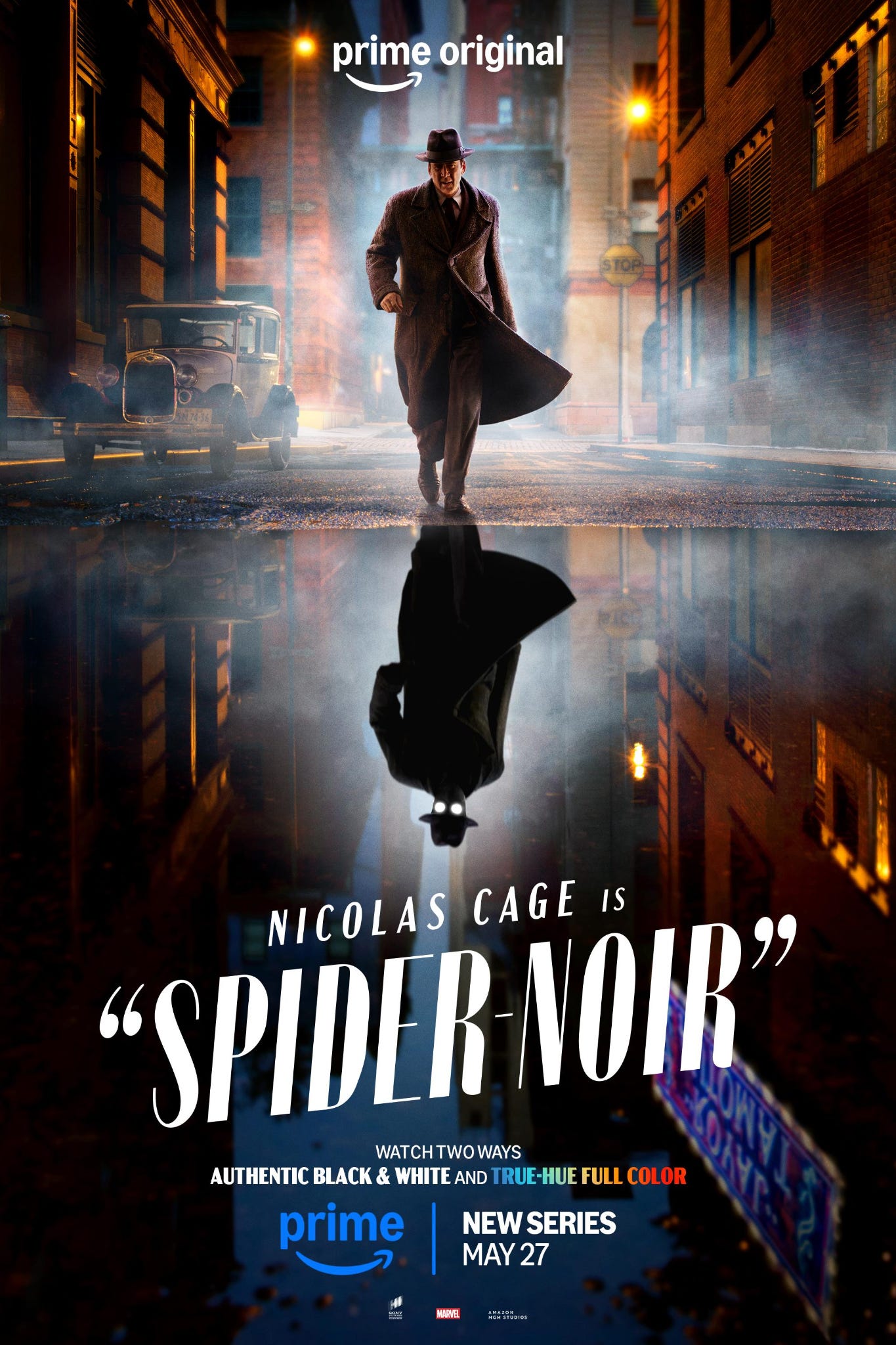
What happens when you mix all of the intriguing shadowy nature of a noir style detective with the colorful personality of your friendly neighborhood Spiderman?
The answer: you get “Spider-Noir”, a highly acclaimed show on Amazon Prime Video starring Nicolas Cage that in less than a month has already amassed around one BILLION (yes you read that right) minutes of streaming. It currently sits as one of the top five most watched shows on the platform, consistently finding itself in the “trending” section. And for good reason.
The series follows Ben C. Reilly, a seasoned, down-on-his-luck private investigator in 1930s New York City. Once the city’s only superhero, he gave up being “The Spider” after a deeply personal tragedy. However, a web of mobsters, mysterious characters, and superpowered villains eventually forces him to grapple with his past and suit up once again.
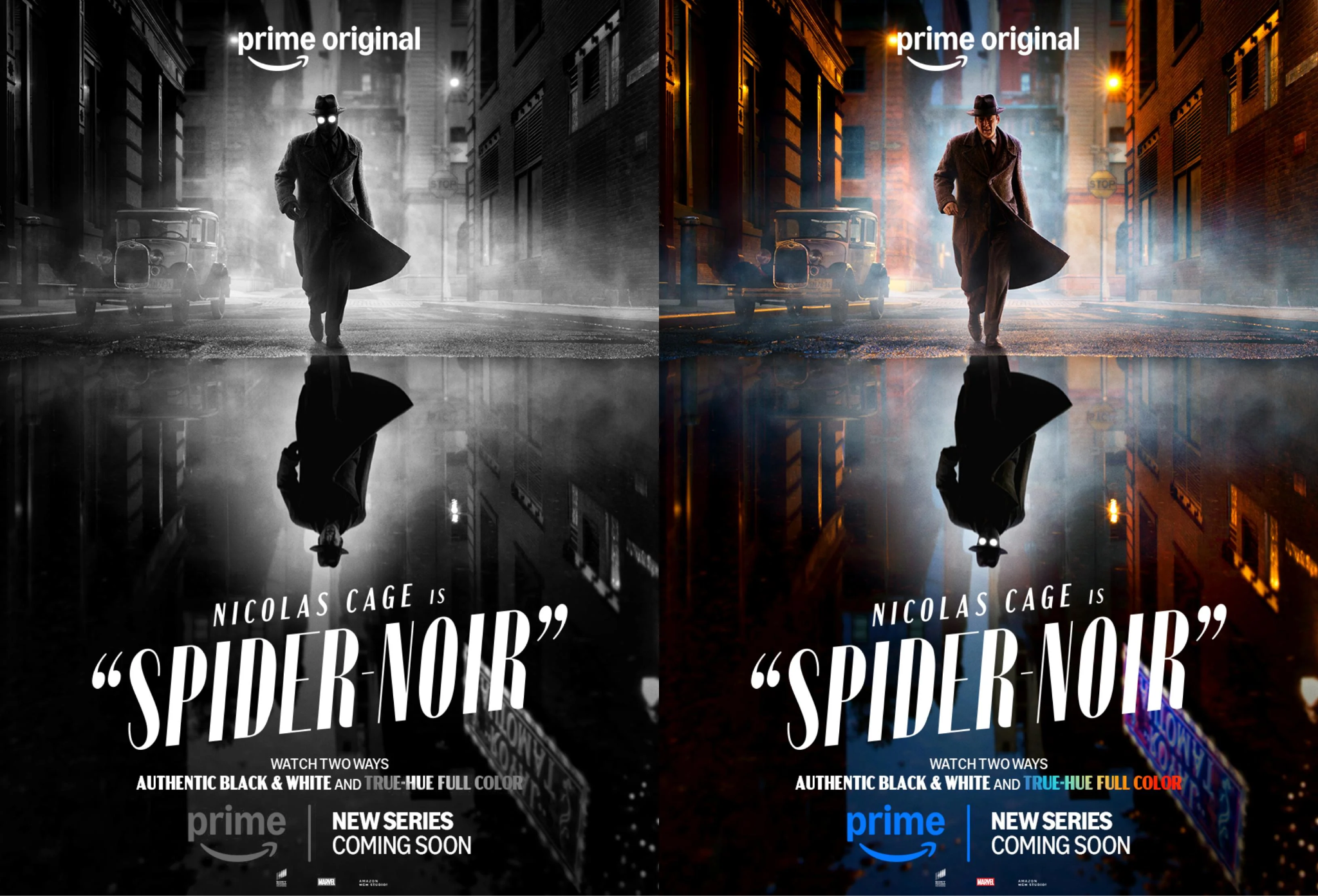
One of the coolest components of the show is the fact that it gives you a choice as a viewer: you can watch the episodes in black and white, or in true hue color. It’s truly one of the more unique series conceptually available to stream. For the success of this one of a kind premise to truly work, it requires a top notch editing team that can find ways to tonally match the innovative vision casted in by its creator, Oren Uziel and Steve Lightfoot, alongside executive producers Phil Lord and Christopher Miller.
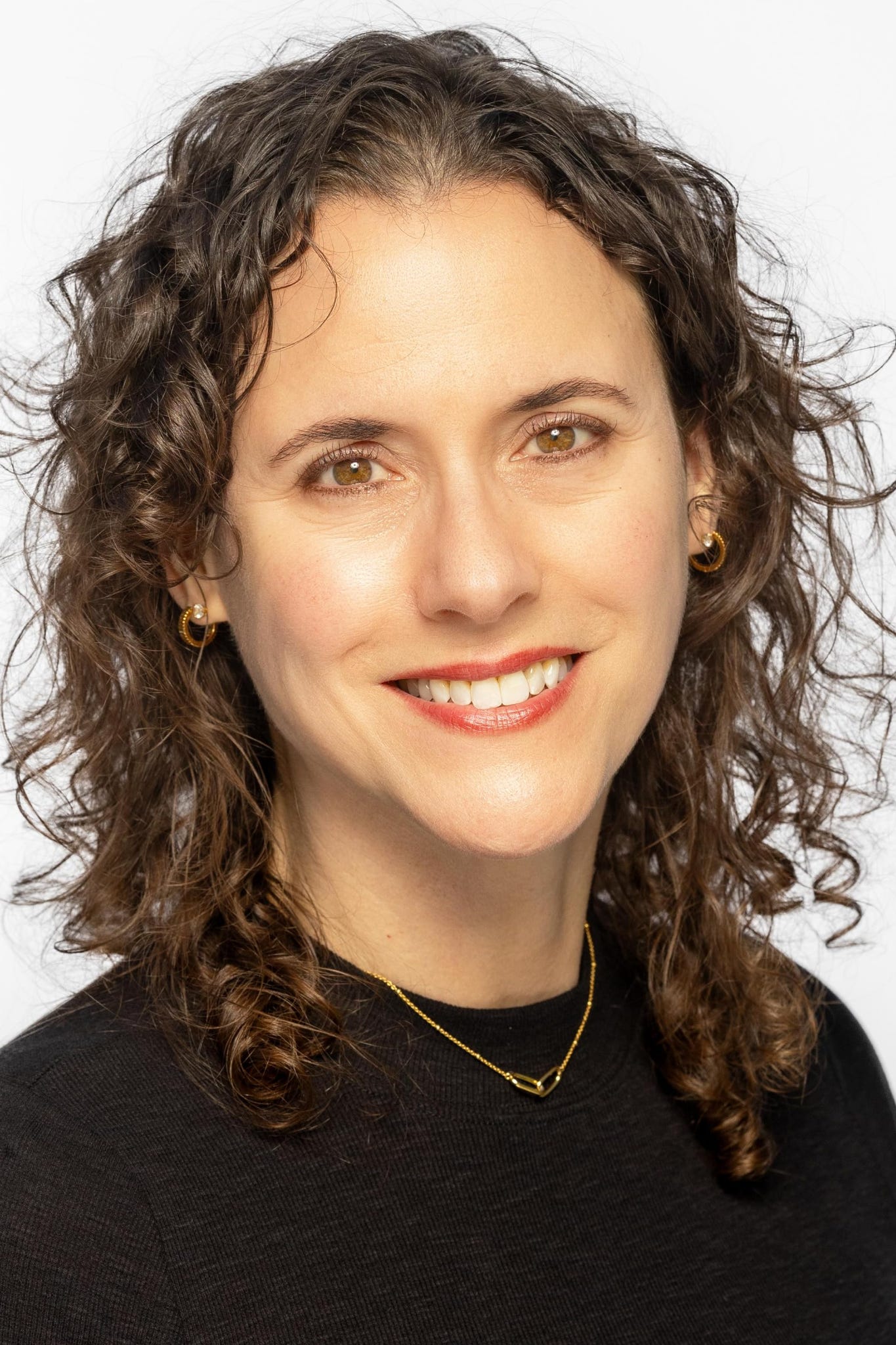
Which is why I’m excited to talk to Jennifer Barbot, an editor on the aforementioned show. She recently edited the pilot of “Spider Noir” and the series finale of Anya Taylor Joy’s new series, “Lucky”. She has also worked on such shows as “Dope Thief”, “Your Honor”, “Raised by Wolves” and “Man in the High Castle”.
Jennifer was trained in journalism at the University of Illinois at Urbana-Champaign. In college, she worked for PBS producing and editing documentaries. Jennifer taught film editing for the MFA program at NYU Tisch School of the Arts, Asia in Singapore. She loved working with the students and sharing the art of editing. She also taught a film editing class at NYU in Abu Dhabi.
Jennifer is proud about her Cuban Latina roots as well as her French heritage. She is fluent in both Spanish and French. She is a proud member of American Cinema Editors and is dedicated to fostering diversity at ACE and in the workplace.
Jennifer is passionate about storytelling and loves bringing stories to life on the big and small screen. She hopes to, one day, edit a project in Spanish and/or French.
Jennifer was gracious enough to offer up her time to speak with me about the editing process behind the show. She was very outgoing and insightful in our conversation. I hope you take away as much from this discussion as I did.
Without further ado, let’s get to this interview!
What inspired you to become an editor?
It was really a happy accident. I started out in college, and I was paying for my college by myself, so I needed a job that I could do with flexibility that was during all hours of the night. I was a journalism major, so I have a real fondness for journalism. There was a job as an in-house editor at the local PBS station available, so I applied. Luckily, they hired me and they gave me a key. They said, “you can come and you can work whenever you want.”
They taught me how to use their main machine, which was essentially tape decks at that point. I did all their gardening shows and things like that. Then eventually I branched out to working on their documentaries. The beauty was that I could work whenever I wanted to, so I could go in at midnight, stay up all night working, earn money, and then go to school the next day. I literally fell into the world of editing that way.
Along with that, I really liked the solo part of it. I liked spending the brunt of my time alone, while also still getting to work with different collaborators, getting notes and pushing stuff forward. I loved doing that work so much that I moved to Los Angeles to become an editor.
From there, I got involved in movies and TV shows. It was so lucky. I was so grateful because the nature of the work gelled well with my personality. I love to do puzzles. I love to figure things out. I love to be creative and bring content to life. At the same time, I love to be social and interact with people. It’s like the best of both worlds. I’m grateful that I get to do what I love.
Who would you say are some of your biggest inspirations or mentors and why?
I can tell you right now: my biggest mentor was a gentleman named David Dworetzky. I would always cut scenes with all the editors that I would assist and try editing and practicing things. But starting out, I really wasn’t getting it. I was doing a process of editing that wasn’t working for me.
Luckily, he really sat me down, unthreaded everything that I was doing and said, “okay, try it this way.”
So, I took his advice, and then I developed a hybrid process. I took some of what he was doing, while developing my own style as a result.
But what he really said to me that was so impactful was this: you need to decide whether or not you truly want to be an editor.
At the time, I was all over the place: I directed short films, while doing so many different things at once hoping something would stick.
But he made sure to emphasize that if I wanted to be an editor, I had to truly commit to being an editor. The advice really resonated with me. I worked hard to improve my skills, and my editing improved after that. My time working with him made a huge difference in my career. The best part? He’s still one of my best friends today.
In your mind, what separates the best editing from the rest?
Intentionality is so important. As an editor, you need to be somebody who has a point of view. It doesn’t have to be the right point of view all the time, but you have to take a point of view, and you must cut the scene with it in mind tonally.
For example, if it’s an action scene, I want to feel like it was intentional in the way that it was cut. That it wasn’t just a mismatch of random stuff that is hard to follow or understand. To be fair, sometimes when it’s just a mismatch of stuff, that can count as a point of view. But at the end of the day, I want to know that whoever was cutting it had an actual vision in mind when putting together the sequence of events and not just throwing nonsensical chaos onto the screen hoping people would follow along without issue. I want to know that I’m in good hands from a storytelling perspective. That I’m being told the story in an interesting tutorial way.
Speaking of interesting stories, you recently worked on the hit show “Spider Noir”. What conceptually about the idea behind the show drew you into it?
I came to the project because my current showrunner, Peter Craig is friends with Oren Uziel. Peter had put me up for the job.
The first thing that jumped out came when I read the script. I loved that it wasn’t superhero over the top, or even superhero focused for that matter. At its heart, it was a detective story. It’s more so a character piece on somebody who’s getting older. He’s a detective, and then he is forced to use his superpowers again. He doesn’t have a choice in the matter.
The story is not about Spiderman. It’s about a detective story with a guy who happens to have superpowers. I really liked that. Most of my work is in drama and character study pieces and things like that.
I was definitely drawn to the story, but then when I found out it was Nicolas Cage, I was like, “okay, this is a no-brainer.” I’m a huge Nicolas Cage fan. From “Wild at Heart” to “Raising Arizona”, to all the other amazing stuff he’s done.
I was really excited to see what he would do with the character, and how he would embody it. Needless to say, I was not disappointed. His raw footage dailies were very interesting and just really fun. Sometimes, he would just go full-Nick Cage. It’s so unbelievable, yet you believe it, you’re in it with him, he sells you on the individual, and he commits to it. He embodies the character in so many compelling ways.
The show offers viewers a chance to watch the show in either black and white or color, which is a novel idea. I’ve never seen a show do this before. How did this aspect affect your editing process, if at all?
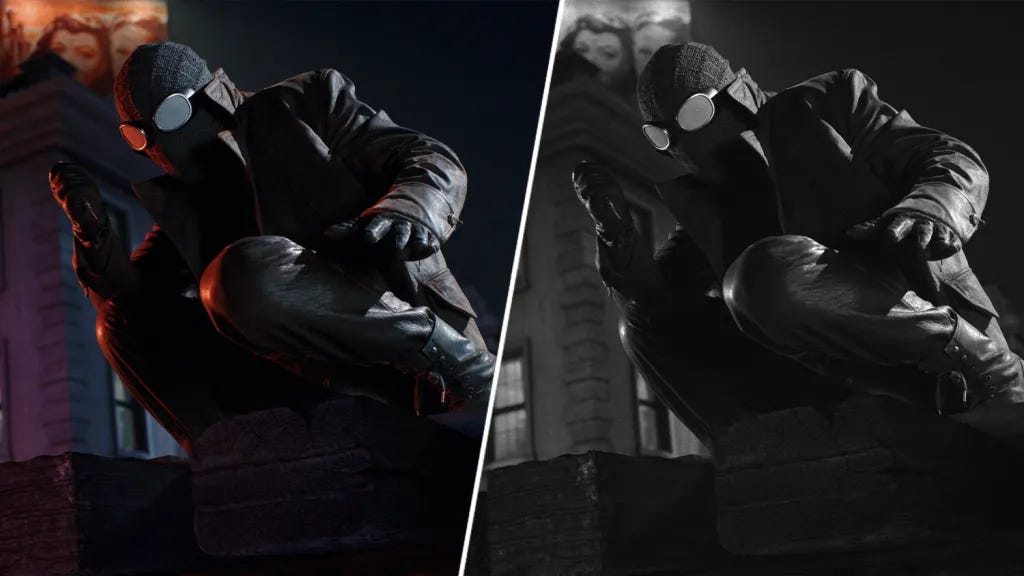
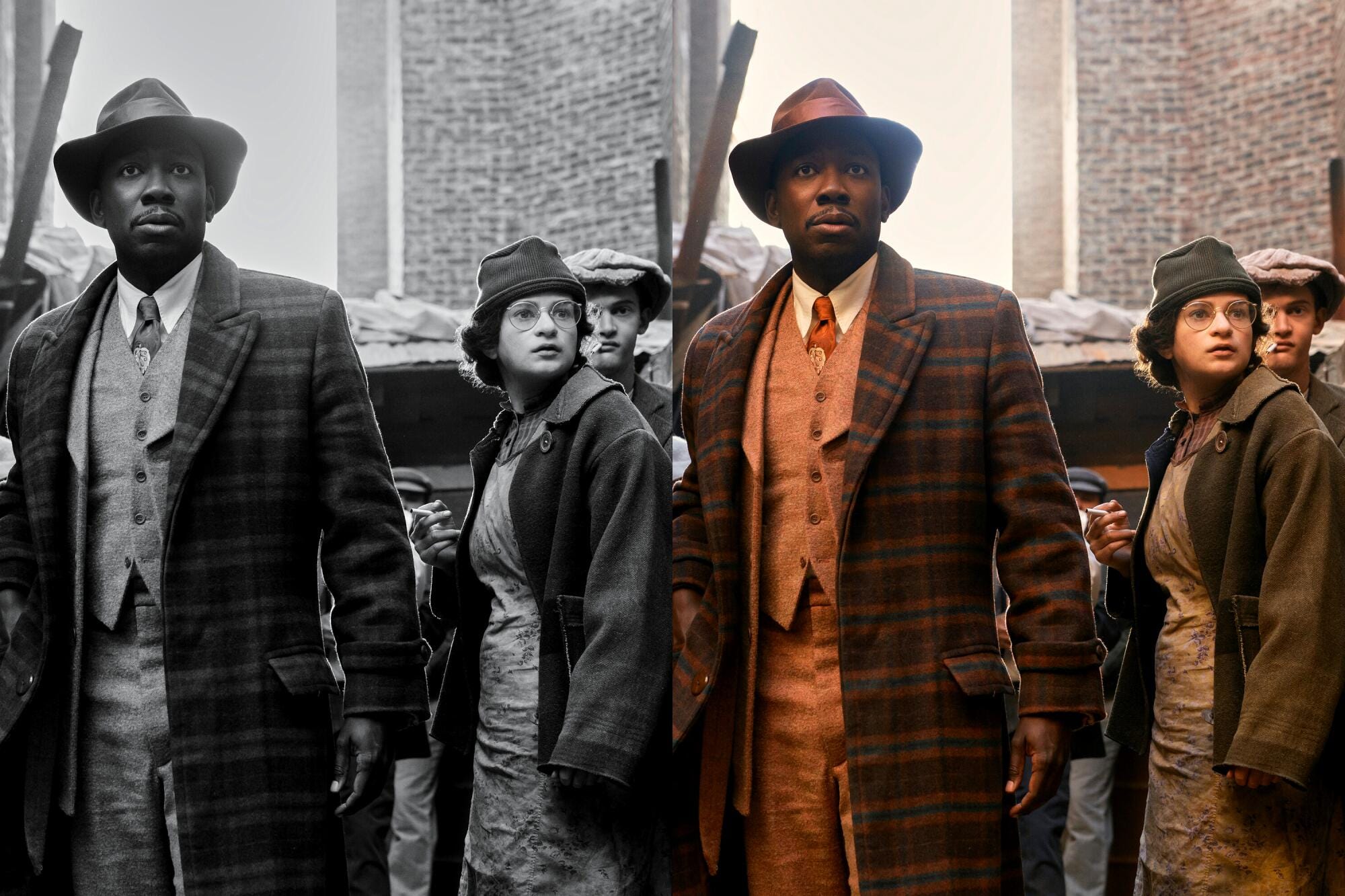
To be honest, it didn’t affect me process wise as much as you would think. I was cognizant of the intention of it being black and white. Because it’s “Spider Noir”, it’s supposed to be that way. I think I edited more for black and white because it better set the tone we were going for. I wanted to keep the show in the noir vibe, so I was not thinking about how it would go back and forth to color. I never thought to adjust the way I approached a scene to accommodate those preferring to watch the show in full color.
Interestingly enough, I didn’t see anything in color until like six months into working on it. I edited exclusively in black and white. In fact, all four editors did that. So, upon first glance, it was very surprising to see the footage in color.
What was your reaction when you finally saw the color footage?
The first time I saw it was in visual effects, because those had to be done in color, since there’s so much more information in color than there is in black and white. There were these big, long shadows or something along those lines that would hide signage or other aspects that would need to be fixed and put in the period piece.
I remember walking into visual effects and as I was walking in, seeing a scene in the alcove that was purple and orange. I was like, “wow, I had no idea that these colors were there.”
I mean, of course I had been down to set to see stuff. But it’s one thing to be on set, and then another to see it colored in shots. It’s very different. It was really cool.
One of the other scenes in color that jumps out at me is one we like to talk about a lot in episode two of the show, where you see them open up the drawer with all the ties from Robbie. They’re orange and bright and they really jump out at you in a big way. That’s informative of the character as well.
What would you say were some of the biggest challenges you faced while editing the show and how’d you all go about overcoming them?
We really wanted to get the tone right. We wanted to have a solid number of nods to noir styles of filmmaking. For example, in the scene where we introduce Cat Hardy, that plays out a little bit slower. It’s more romantic. You could potentially see a version of that being super hypercut, almost like a music video kind of thing. You could make a very flashy version of that. But I chose to keep it a bit slower and more romantic, sort of as an ode to the 1930s femme fatale kind of thing.
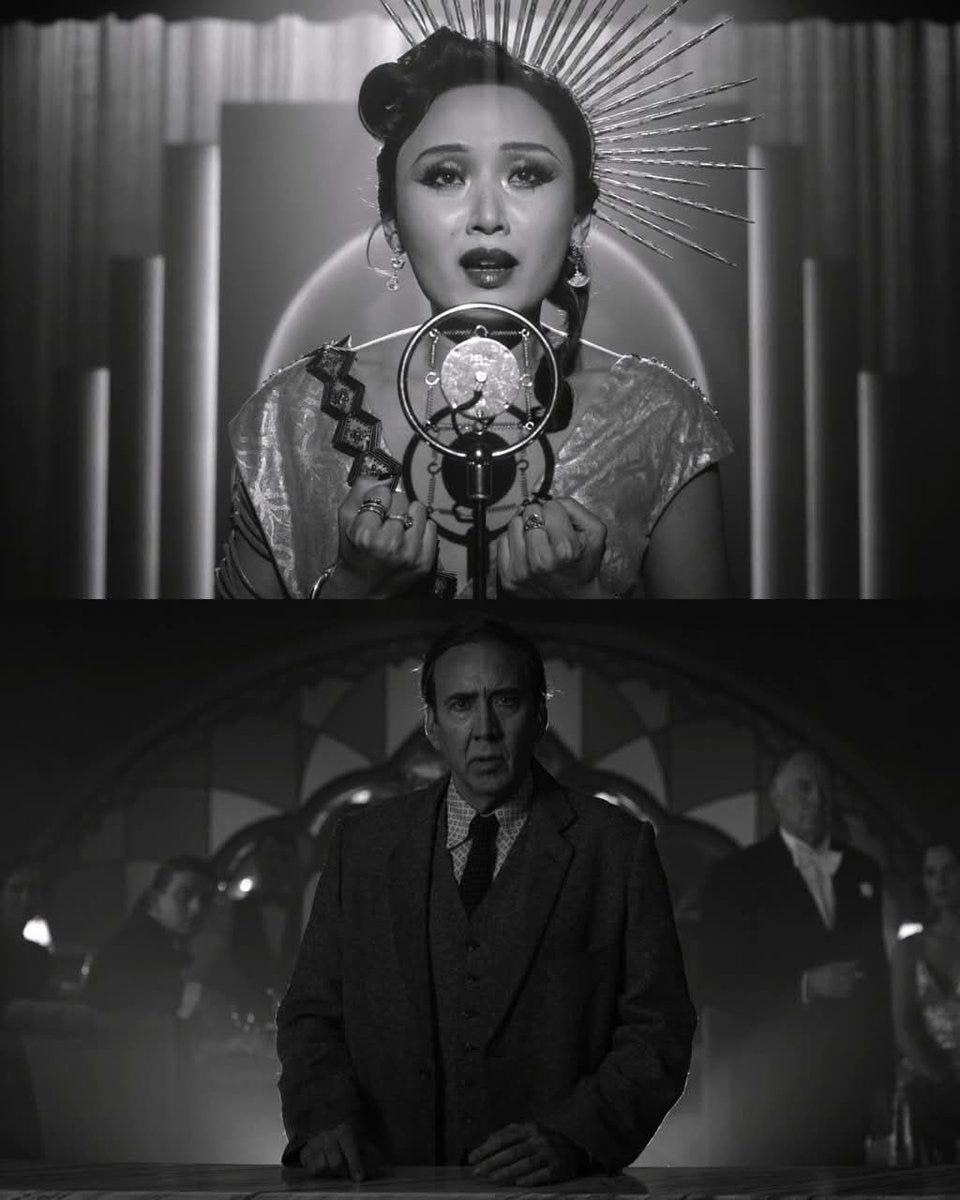
But then when you have a scene like the “rat tat tat” back and forth of detective Ben C. Reilly and his assistant Janet Ruiz: that’s very 1940s oriented dialogue and pacing we needed to convey. Both Nicolas Cage and Karen Rodriguez were excellent in that, which helped a lot.
The challenge was finding those moments to do both. Then we also needed to showcase the action stuff, which doesn’t play slow. Modern audiences have an expectation of what action should be like now. Because of that, I found like we couldn’t really do slower action, because it just didn’t work. These pace changes made it really challenging at times.
The opening scene of the show was one we spent a lot of time working on to really get right. Something I really like about it is that it’s a litmus test for what the whole series is about. It’s a mashup. It’s black and white, noir, and you have Spider-Man swinging through New York and there’s a Sunset Boulevard style voiceover over the top of it. It proves that the culmination of everything we wanted to convey can work. All the while telling the backstory of Ben C. Reilly.
It was such a balance to figure out how to blend live action with the animation in the scene, and to determine what animation we were going to use. I would get storyboards from our fantastic artist, then him and I would talk about it, we would refine it, then arrange everything in a way that we liked, then he would give me an animatic of it, (which means that it goes really fast), then I’d have an automatic, and we’d put score and sound effects to it.
After that, my assistant, Bart, who’s amazing, did a Nick Cage voiceover as a temporary voice recording so that we could have some audio in there so that Oren could refine it and rewrite it. Bart would record it, and then show it to Oren, and then he would give his feedback. So, we’d change some of the animatics, we would change the positioning of what was happening, or he would be happy with it, or we’d do something else. All of that took a while to do.
Obviously, we didn’t get Nick Cage’s actual voice narrating until ADR (AKA automated dialogue replacement or “dubbing”) at the very end. So that was really the final piece of making the scene.
The guesswork before Nick Cage’s ADR was deceptively tough. We had to predict the timing of how he was going to read the script and make sure our editing fit with that. Once you get the visual effects, they give you a little bit of a handle on everything, so you have a little bit of room to slip and slide. But not too much. You still need to dial that in before it goes to finals.
It took a lot of time to make all that work, alongside all the visual effects. It was amazing to see it like come together. It was a very interesting project all in all.
What was the collaboration process like between you, your fellow editors and the showrunners like?
I have to say, the whole team was really good. We had a very talented and friendly group of people, which made it so wonderful to work on. I edited the pilot, and episode five, Eric Kissack did two and six, Tirsa Hackshaw did three and seven, and Geraud Brisson did four and eight.
Each episode was big. They each had a lot of visual effects components that made it a big undertaking for each editor. As a result, it was really collaborative. I worked from home first, and then eventually went into an office, which I enjoyed. It’s nice to socialize with people, and to see them at lunch. You’d chit chat about something coming up, and the VFX team was on the same floor with us, so that added to the fun. The office makeup made it very warm and friendly, which helped a lot.
I love to work from home, because it gives me such a flexibility in my life, and I am infinitely more focused and accomplished when I work at home because nobody is coming to my door knocking and needing something. I can just turn off my phone and edit. But in the office, there is something to be said for also being in person, as well. There’s an energy that is very creative and a lot of fun. The people I worked with made coming into the office an enjoyable experience, which I can appreciate.
You mentioned that you specialized in episode one and episode five. What would you say were some of the most fulfilling moments that you had while working on them?
I loved working with the showrunner, Oren. He was fantastic. There was another producer that he worked with named Sophia, who was also wonderful. They were smart, funny, story focused, good at coming up with problem solving, and very creative. Oren was so good at coming up with ADR lines on the spot to replace or enhance the audio.
I loved working on the fight at the end of the pilot when he gets punched off the ledge. The visual effects went through many stages to come to fruition, so when it was finally done, it was so fun to see. During that scene, it was also very fun to cut him not being so graceful, crawling on the ground, and doing things like that. Usually, superheroes are overly polished in all their movements and actions, so it was great to work on something that allowed for the character to feel more human.
I also really liked working with the great director Alethea Jones in episode five. I loved how it explores his whole backstory with the war, and everything of the sort. I just thought it was so interesting, and really well shot. I got to see Nicolas Cage lean into his Nicolas Cageness this episode. He sings that song to the other supers, which funnily enough, is something he came up with himself. He had some improving, some riffing on different lines. He just was very, very fluid. I would say that whole kind of section in the episode was really fun. It felt surreal to be able to watch someone I grew up watching in movies ad-lib so many great moments on a show I got to personally work on.
From a big picture standpoint, what are some of the things you hope audiences take away from “Spider Noir” either from the editing or just from the show at large?
First and foremost, I hope they watch it in black and white. I really hope they give it a chance to watch it in black and white, and just sink in, just be with it, and understand that seeing it in black and white is a character in and of itself. It sets a mood and a tone really well. So, I hope people will notice that and give that a chance.
I also hope that the non-superhero fans give it a chance because it’s not superhero forward. It’s moreso a detective show that just happens to have Spiderman in it. I’ve been satisfied with the positive reception people who don’t typically watch superhero stuff have given it. I’ve spoken to both friends and people who are huge Spiderman fans, and people who aren’t, but both just love a good character story. And they are both equally engaged which is so satisfying to me. It was something that I had really hoped would be the case for this project. We worked really hard to portray that, and it’s great to see that hard work pay off. Oren also did a really good job writing all these episodes so I was hoping for the best.
When people positively respond in the way you want them to, every part of you is just like, “YES!”
Like you said, this isn’t really a “superhero” show. From an editing perspective, how did you go about striking that balance between incorporating the superhero component while making it its own standalone thing?
It started with the script, because, we didn’t lose scenes or anything like that. It was definitely meted out very well over the course of the eight episodes.
To illustrate my point, it’s good to examine the whole jail break scene in episode five when they break Megawatt, who is played by Dirk Leyden, out of jail. There’s a whole section of it with the main villain Silvermane where he enters the area first to confront him. That’s not superhero focused. It’s just the mafia coming in and figuring out what they’re going to do with him.
Then, it becomes a superhero thing. Megawatt has the lighting power he uses, and he has a revenge type confrontation with the guard where he electrocutes him by kissing him. It was all just very well distributed throughout the episodes from a balancing perspective, which made the surreal superhero actions feel organic to the story. The guy used his powers to get back at the guard, which served to establish the theatrical nature of his character. It wasn’t just visual effects for visual effects sake.
On a side note, Dirk Leyden was so talented as an actor. He acted pretty psychotic as Megawatt, but off camera he would break character and be a totally normal person. He could switch personas on a dime.
How much footage did you typically have to go through to find the perfect shots to use?
We had a lot of dailies. I always watched them. I hope most editors do. Then I would just make some selects: I would pull chunks out of stuff that I thought looked interesting.
Something to keep in mind is that it’s one thing to watch a take in the dailies that’s dynamic and interesting, but another to properly bring out the best in it. Sometimes, if you just pull a piece of that footage, it loses some of the oomph and interest in it, because you don’t have the whole scope around it. So, I had to keep making sure that when I’m watching something back that I cut, that I did not feel like I lost the magic of the take. That if I had an actual reaction in dailies to it and I felt a certain way, whether it made me laugh, or sad, or anxious, or whatever it was, that I still retained that feeling while watching the cut scene.
Sometimes it means not editing as well. Sometimes it means just watching and observing. It’s important to know when to make cuts, and when to let things breathe. Discerning that is key to successful editing.
What would you say are some of the biggest life lessons you learned while working on Spider Noir?
A big thing I learned is that you always have to take chances. You don’t have to have all the answers all the time. Sometimes you can present something to someone with the intention of building on it.
Going back to what I said earlier: you have to have a point of view you’re going for in the editing of your scenes, but you also have to be open minded to other visions too.
Other people can give you great ideas. So how can you incorporate theirs without ruining yours, and make it the best it can possibly be?
I mean, it’s so cliche to say it, but there’s really never a wrong answer in our field, because if you say something, then others can build from here, and then others can build from there, and it keeps going until you get the best idea possible. To get to that point though, it’s important to stay open minded and flexible.
From an editing process from start to finish, how long did it take for you to work on your respective episodes?
We started production in September of 2024. And I finished in May 2025. So, it was a while. It was an undertaking, and that was just for picture lock. The visual effects still had many, many, many weeks to go from there. That alone took a really long time. Plus, we had to make time for playback.
What would you say are some of your future goals that you’re hoping to accomplish?
Well, I would definitely love to continue to work with really strong and interesting people that have a good sense of story and are good visual storytellers.
I would also love to broaden my horizons further, and edit a feature film. I think that would be really interesting. Maybe it could be something in either Spanish or French, because I speak both languages. Anything that would involve a strong character piece with an interesting drama story would be perfect to be a part of.
It would be great to get a chance to edit all parts of a six-episode series, which is, in and of itself, like a small movie. I think that would be really interesting.
But going back to what I said earlier: above all else, I want to work with people that are creatively interesting, and bring unique perspectives to the table. I like a lot of these big movie directors that are coming in and doing TV. I worked a lot with Ridley Scott, and he’s so cool. In fact, Alien is my favorite movie. It’s just really fun to work with people like that who come in with all these sorts of expertise. Ridley is so smart, hard-working, great to the editing room, and just all around an amazing person.
Along with him, I grew up watching a lot of the greats: Steven Spielberg, James Cameron, Martin Scorsese, you name it. If I got the chance to work with any of them, that would be absolutely amazing.
What would you say are your biggest pieces of advice for someone who’s trying to make it in show business?
It’s such a hard time in the industry right now. But despite that, I would say to always have a positive attitude, and to understand that no job is too small to do.
Even if you’re hired to be a PA (production assistant), that’s okay. Own it, be the best PA you can be and people will notice it. They will want to keep you around, they will want to hire you, they will want to collaborate with you as much as possible, and you can move up that way. If you start strong, then you can keep moving your way up. Even if it means taking a large step back to get that strong start.
For instance, if you want to break into the industry, even if you’ve made your own films or edited your own projects in the past, but you have to come into a production as an assistant, that’s still a great place to be. You’re making contacts, meeting people you want to work with, and going from there.
In that process, it’s so important to surround yourself with the right crowd, because you spend a lot of time at work. Every job in our line of work is difficult to pull off successfully. If you can collaborate with good people who are funny, and who are kind and loving, it makes a big difference. Nobody wants to be around someone with a bad attitude.
Is there anything that we haven’t discussed that you would like to bring up or mention?
I worked on a show called “Lucky” that’s coming out for AppleTV on July 15th which I’m really excited about. I did the finale of that with Jonathan Van Tulleken, who is a wonderful director! I am also currently working on a series for Netflix called “Rabbit Rabbit” that stars Adam Driver and Regina Hall. That’s with Peter Craig, who set me up with Oren to work on “Spider Noir”. So that was also really fun. I’m excited about all my current projects. I feel like it’s been a very nice run for me, so I’m grateful. It’s an incredible feeling. It’s a lot of work, but it’s amazing.
Jennifer, thank you very much for taking the time to talk to me today! It was an absolute pleasure to learn about the editing process, along with all the intricacies that came with the making of “Spider Noir”. Be sure to check out the show on Amazon Prime Video and at the very least, watch one of the episodes in black and white.
This interview gives such a fantastic look at the balancing act of editing. The idea of purposely slowing down scenes for that 1930s femme fatale vibe, while keeping modern action fast enough for today's audiences, sounds like an incredible challenge. Jennifer’s point about editing needing a deliberate 'point of view' is a wonderful takeaway.
This was a great interview with Jennifer Barbot. It was great to read about her and discover a piece of Sider Noir. My husband and I are part of the 1 million streams of Spider Noir on Amazon!