

An Interview with High Potential Cinematographer Mathew Rüdenberg
We discuss his mentors, his creative process to capture magical moments on camera, his work behind the scenes on the show “High Potential”, his advice for those trying to make it, and so much more!

Part of the entertainment value behind anything murder mystery related stems from the fact that as armchair viewers, we can try to put the pieces together in our mind that help us think through how to solve the crime. Over the years, audiences have been blessed with many charismatic, high profile individuals to help us on that journey of case cracking. Examples include Sherlock Holmes, Benoit Blanc, the crew from NCIS, and of course, my favorite, cheesy one liner aficionado Horatio from “CSI:Miami” played by David Caruso.
If there’s one thing I’ve learned over the years, it’s that there’s no one singular successful way to capture a criminal. It often requires creativity coupled with strong analytical thinking while following a certain police procedure. Every time you may think that a certain genre has run out of ways to do something, a new concept comes along and changes those preconceived notions. Which brings us to one of the newest popular crime shows that blends comedy with mystery: ABC’s “High Potential”.
Created by Drew Goddard based off the French show “Haut Potentiel Intellectuel” the show follows Morgan (played by Kaitlin Olson who is also known for her work on “It’s Always Sunny in Philadelphia” and “Hacks”), an intellectually gifted single mother of three whose attention to detail more than makes up for her lack of experience in law enforcement as she helps the police piece together some of the highest profile crimes in the area. After a brilliant intervention on a complex case, she is recruited as a highly unconventional LAPD consultant, partnering with the by-the-book Detective Adam Karadec (played by Daniel Sunjata) amongst others in the force to solve cases that stump seasoned investigators.
“High Potential” currently ranks as one of the most-watched broadcast network series, regularly drawing audiences of over 12 million viewers per episode and hitting up to 17.2 million multi-platform viewers. For an unconventional crime show like this to reach high levels of popularity, it requires a ton of moving parts, including creative camerawork that helps accentuate all the dramatic and comedic elements that unfold throughout the course of each episode.
Which is why I am excited to delve into the world of camera work with Mathew Rüdenberg, a Director of Photography for this hit show.
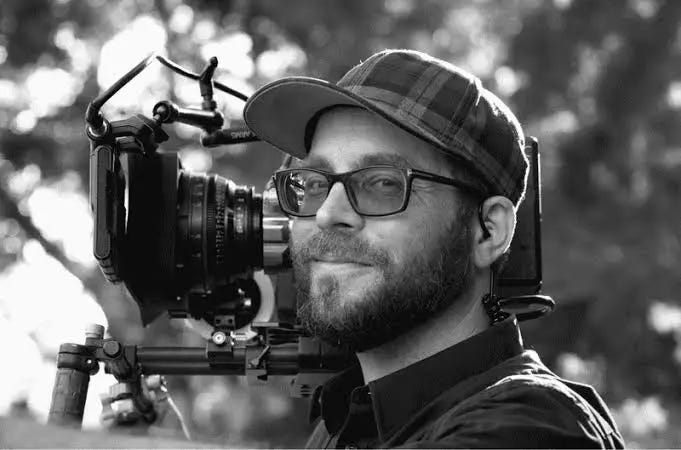
South African–born cinematographer Mathew Rüdenberg is drawn to moments when camera, lighting, and performance all come together to heighten the emotional impact of a scene.
As you probably know already, he recently served as Director of Photography on the ABC drama “High Potential”. His television work also includes cult favorites “Blue Mountain State” and “Kroll Show”, as well as the Emmy-winning interview series “Actors on Actors.”
His feature work includes the Tribeca-premiering science-fiction thriller “Ultrasound” and the Kevin Hart action comedy “Die Hart 2: Die Harter.”
He lives in Northeast Los Angeles with his wife and two children.
Mathew was gracious enough to offer up his time to speak with me about all things under the sun related to everything including lights, cameras and action shots. He was a friendly and thoughtful individual to speak with. I hope you all take away as much from this conversation as I did!
Without further ado, let’s get to this interview!
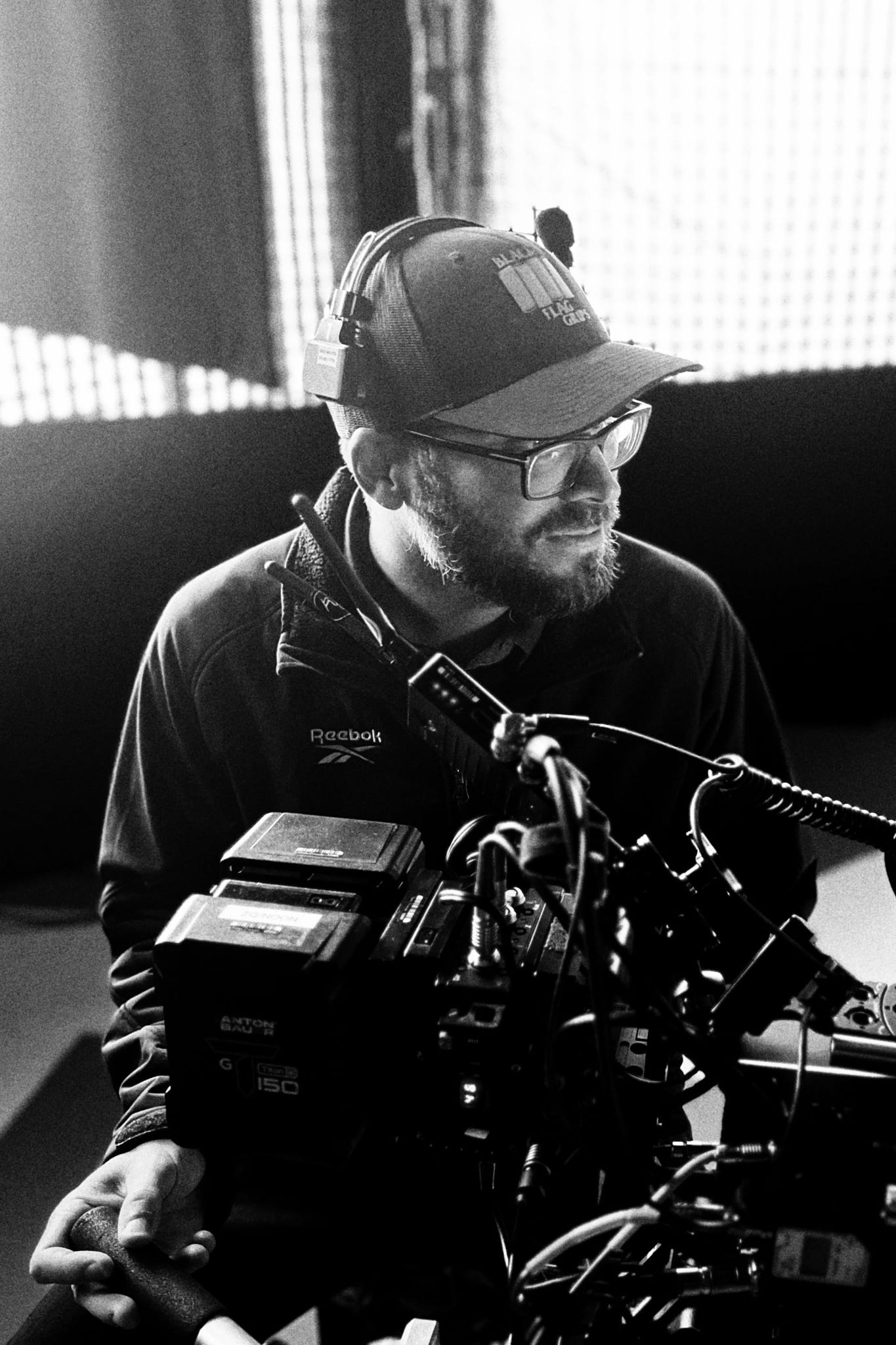
What inspired you to become a Director of Photography (DP)?
I think a love of bringing stories to life is where it comes from, because I read a ton of books when I was a kid and whenever I was reading, I would see pictures in my head. I would imagine sequences, and I was always trying to find ways that I could take those pictures I would see in my head when I read those stories and make them real.
I experimented with other mediums like painting and print. I briefly did a course in graphic design, but when I started experimenting with photography and lenses, everything just clicked. It made sense, because I have a very analytical mind. So, using lenses and lighting to capture angles, and then using those angles and those geometrical perspectives to create emotion was just something I found very powerful and appealing.
Then being able to use those skill sets in terms of telling stories on features and working on television shows has been an absolute joy. It’s definitely something I love.
Who would you say are some of your mentors and/or inspirations and why?
One of the first was my high school art teacher, Mrs. Wilkes who recommended I go to the design academy and experiment with photography. She was probably the earliest influence.
Then there were just so many people that I’ve met along the way that have graciously given me opportunities and seen the work I’ve done and wanted to work with me and collaborate that have progressed my career to where it is now. For example, I was shooting low budget horror films, and David Katzenberg and Seth Graham Smith met with me after I did a half a million dollar horror film called “Basement Jack”, that was a fun slasher film to work on but pretty limited in scope. They immediately hired me to shoot my first pilot. That started out non-union, then eventually went union afterwards, which brought me into the union for MTV. Then we did several seasons of that show, “The Hard Times of R.J. Burger.”
For this show, “High Potential”, the producing director, Nancy Hower and I, we had worked together on a smaller TV show, and then we did a larger feature together, because we clicked immediately. When she came on to the show “High Potential” she brought me along because we had developed such a strong creative partnership.
I’ve been very fortunate to work with such talented people who have given me collaborative opportunities and encouragement over the years.
In your mind, what would you say separates the best DPs from the rest?
It’s interesting because I feel like there are so many talented DPs, and they all have a different path to capturing a beautiful image. You have to follow your own route, and there’s no one right way to do things. There are so many talented people in the field it’s hard for me to say that anyone’s better than anyone else. In my mind, the key to success as a DP is understanding what works for you and embracing that.
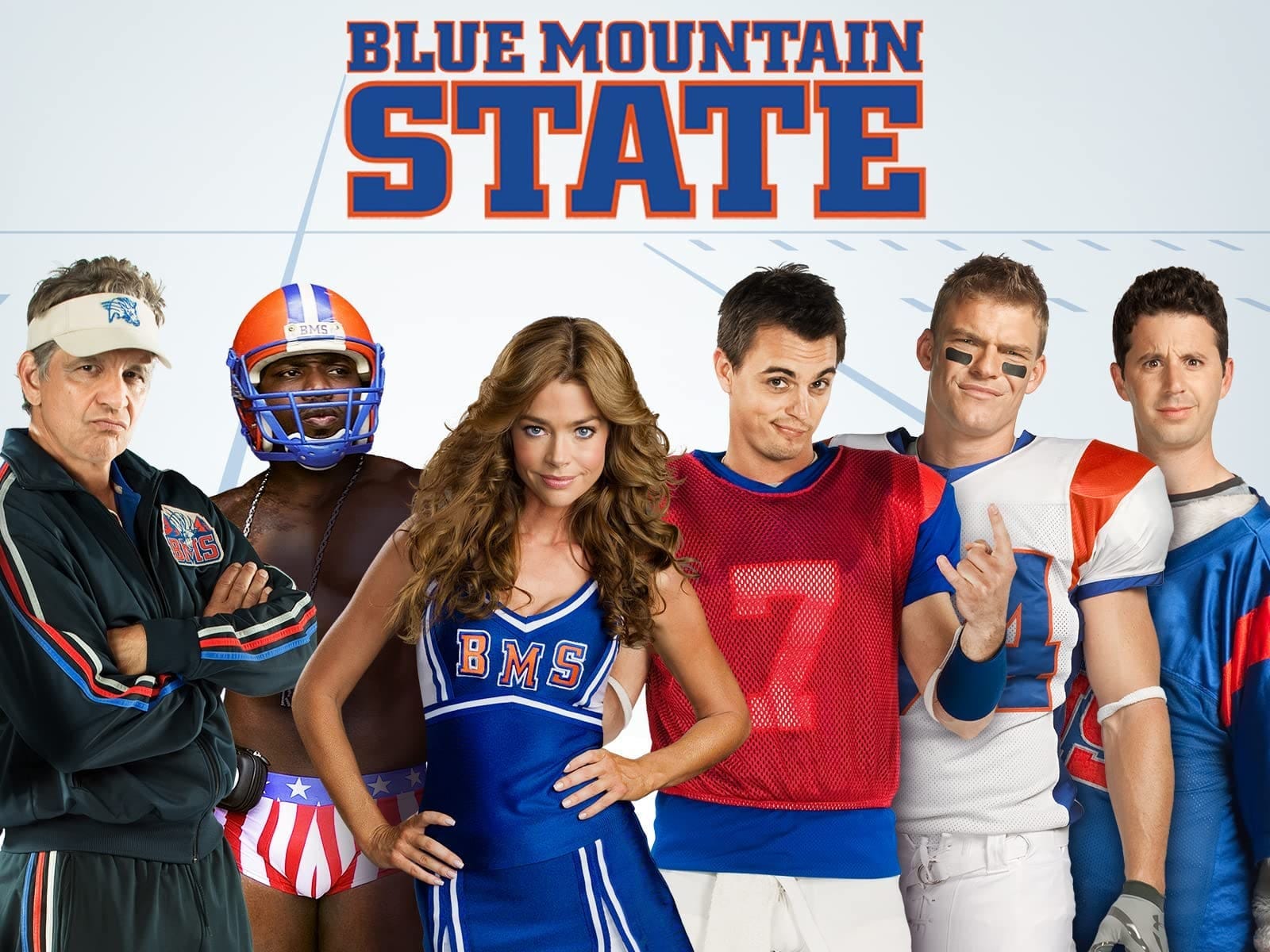
Prior to “High Potential”, one of the shows you worked on was “Blue Mountain State”. What drew you into that project and what was the creative process like for it?
That was such an interesting project to work on. At the time, I was shooting an indie film for Brian Robbins. It was a 3D movie on a shoestring budget, so the camera was like 150 pounds. We broke a dolly because it was so heavy. The 3D guys were like, “you can’t shoot 3D this fast.” And I was like, “well, we gotta…”
Fortunately, my connection with Brian led to more opportunities, one of them being “Blue Mountain State”. He was producing the show, and they were in need of a DP for their third season. So, he approached me and was like, “how would you feel about going to Montreal?”.
I met with the creators, one of whom is an actor, Chris Romano, the other Eric Falconer. Romano played the role of the school’s mascot on the show. We hit it off, and before I knew it, I found myself in Montreal.
The environment working there was quite the party. Even though a lot of fun was had, everyone was very committed to working hard and going above and beyond. The tone meetings for the show were legendary, filled with creativity. They didn’t want to do a straight comedy. They wanted it to be visually striking. They wanted it to push the boundaries of what we could do in terms of visual comedy. They also wanted to pay homage to other films: we did “Godfather” references, we did a “Memento” episode. So, we stylistically needed to embrace their unique vision.
One of the craziest moments I can remember came during the show’s finale. We had to build a football field in a corn field since we were referencing the classic film, “Field of Dreams”. But first, they had to fill it with marijuana plants because the area was also supposed to be a secret marijuana farm. Then they needed to cut out all the corn to make a field and put the turf out so we could capture some football.
But the ground was made of clay, and there was no time for the turf to take root. On top of that, the weather in Montreal where we shot was very variable. When it rained like crazy, all the turf floated up off the ground. We had to stomp and wade through all the mud, and we couldn’t put any heavy vehicles or equipment on the ground because the turf would be torn up. It was such a wildly unique experience.
Earlier you mentioned your connection with Nancy Hower led you to working on “High Potential”. What conceptually about the show made you want to be a part of it?

One of the advantages of coming for the second season of the show is that I had the opportunity to watch the first season and see the exceptional work that had been established beforehand by the creator, Drew Goddard, and the pilot director, Alethea Jones. I find as you watch a long form show, you can get a sense of how it’s developing and evolving.
There were certain things that leapt out to us. What immediately stood out was how visually ambitious the show already was. There are these Morgan Visions where we see inside Kaitlin’s mind. There’s just such a rich opportunity to embrace almost any kind of visual expression. They break up the show in a way that gives us this outlet for endless creativity. We get around three or four opportunities an episode to explore a very different visual language.
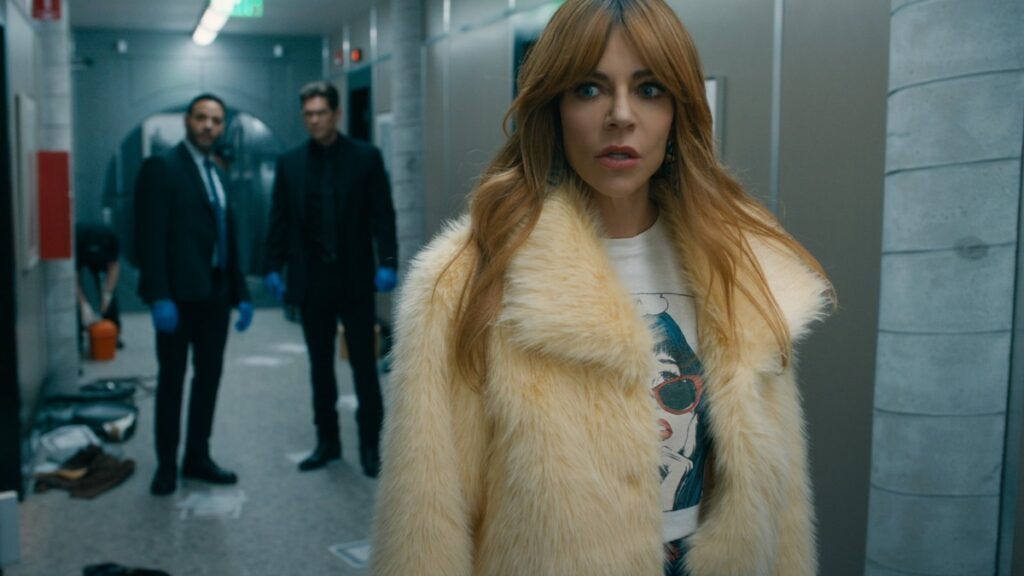
Also, Kaitlin’s so brilliant in the lead and she is colorful and different that creates all kinds of opportunities for interesting juxtapositions. You’ve got this police procedure that’s more grounded, with regular cops doing their job. They’re all good at their job and working hard. But then, you got Kaitlin Olson playing Morgan, who’s in the police station, and she’s dressed colorfully and unconventionally. She works alongside them, but she’s not really part of their world. Because of that, the interesting thing about this show is just there’s an inherent visual conflict between her being something colorful and different that contrasts with the grounded police environment around her.
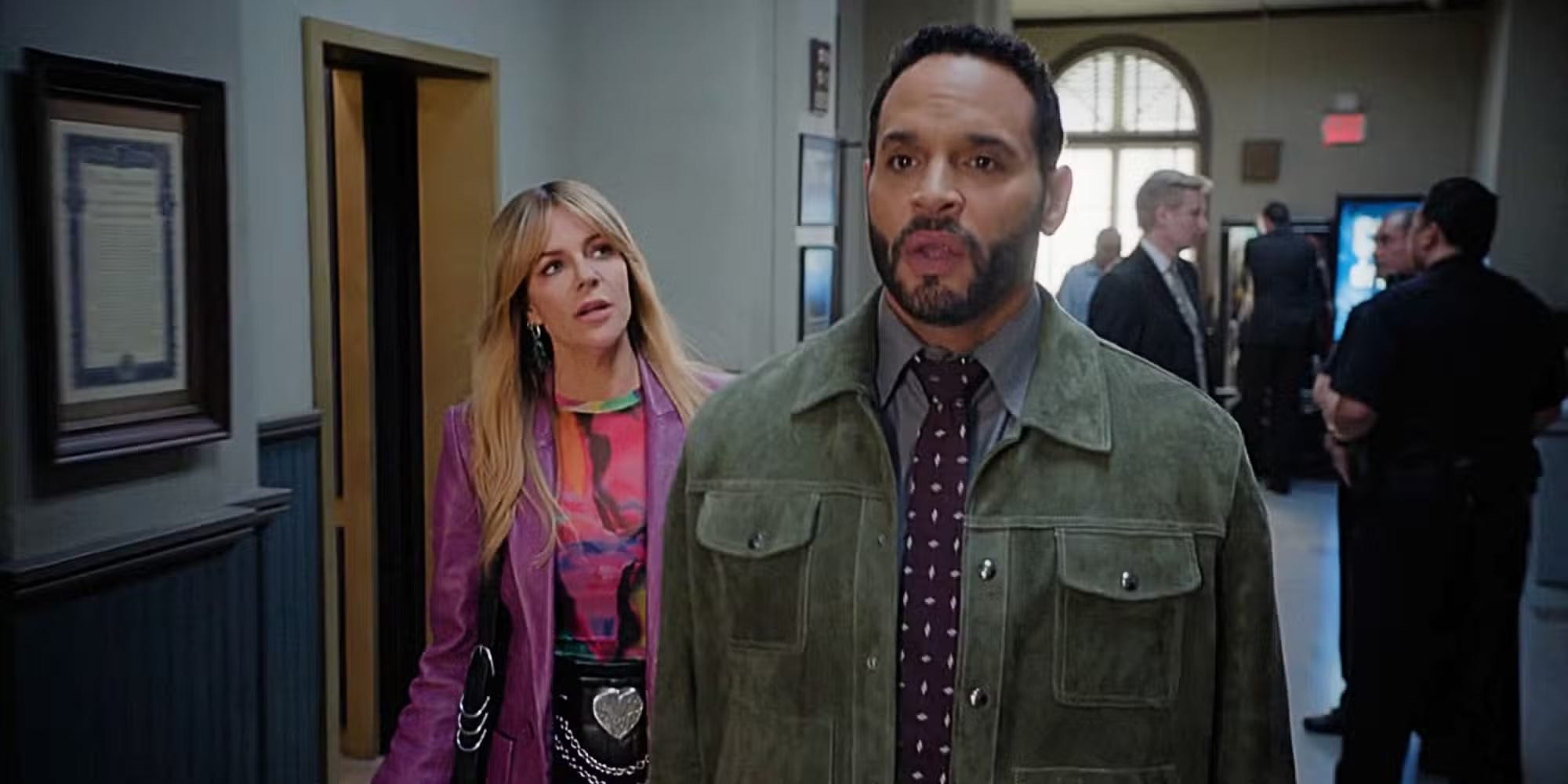
So that was just naturally exciting because conflict is the heart of storytelling, and it also informs visual storytelling. We really leaned into that contrast.
I’d love to learn more about the creative process behind that contrast. How did you go about magnifying these differences you talked about?
There’s definitely a lot of work that we did with color. My colorist at Company 3, Cody Baker, did a fantastic job building a LUT where we could lean into a little more of that cooler procedural look with the blues and the shadows and stuff like that.
I’d keep a gritty feeling when I had more pure police things going on. And then when Kaitlin came in, I would give it more of a glow and just make her feel a little more like someone independent of the policing world as it were, because she is such a special part of the show. This worked in combination with the fantastic work that the costume department did in dressing her so we could make sure all these elements worked together to elevate her out of the space.
Along with the police aspect, there’s also Morgan’s home life, and her personal story which we kept warm in contrast with the cool tones of the police station. Those moments have comedy in them, but they tend to be a little more emotional because it’s more about how she navigates life as a single working mother. We have to figure out how to balance the comedic, emotional and procedural components as naturally as possible in the making of this show.
We also need to help viewers understand the way she views the world, which is with her unique quirky perspective. That creates additional tension because when we do the scenes revolving around Morgan Visions, we can go even further into the humorous aspect of things because they’re not of the world, but in her mind.
So from a creative perspective, how did you go about maintaining some of the tonal consistency of the first season while still being able to put your own creative spin on everything in the process?
As I mentioned before, I feel like every DP has their own route to finding a beautiful image and you have to take your own path. It’s good to be inspired by what has come before you, but you can never copy exactly what someone else did. So, I think it really comes down to watching the show, understanding the story and the characters and how they are expressed, then making sure that you honor what is established, and look for ways that you can expand and evolve what’s there already, by bringing your own personal perspective and influences into it.
Typically, from beginning to the end of your assignment, what does your process look like?
My key philosophy is always preparation meets flexibility. You need to do everything you can to be prepared. That means you’re reading the script, getting familiar with all the scenes, you’re planning out shot lists, storyboards and all that stuff. But then also in the moment when things change, and they always do change, you need to make sure you’re not being paralyzed by that preparation you’ve done and that you’re ready to change it or throw it all away if the situation requires it.
With network TV, it’s particularly fast moving. The script can undergo transformations. In fact, it can be rewritten the day of shooting, and you just have to be prepared to adjust for it. But, it is network, and we have a fairly tight schedule, so at the same time, if you want to be ambitious, if you want to pull off something more complicated, you need to make sure you’re completely prepared in advance, because that’ll allow you to achieve something that would otherwise take longer.
For example, in episode seventeen of season two, we did an intricate shot where we had a steadicam on a crane, and then the crane lands and the steadicam then walks off and travels through with the cops in a single shot as they raid a warehouse. To make that happen, we had to go through the set multiple times and plan things out with the key groups to make sure we had the right equipment. We also needed to make sure the steadicam operator was ready for everything they needed to do and so we previsualized multiple variations of it to ensure the timing would work, because on the day, we had to shoot that walk off without coverage. That same day we had to shoot a practical explosion in the warehouse, with stunt people thrown everywhere, beautifully choreographed by stunt coordinator Kimberly Shannon Murphy, and we also had to have a car smash through a barricade.
All of that needed to happen before lunch.
Then, that afternoon, we had to shoot more scenes. As I mentioned earlier, to create something ambitious, that preparation is the best way to achieve it.
In this case, it helped that I have an established working relationship with Nancy Hower. We sat down and planned all of those things out. Even though details changed, our preparation allowed us to execute what we needed on the day.
What was the collaborative process like as you were trying to work with all the different moving parts within the production of “High Potential”?
We were very fortunate on this show for many reasons. It shoots in Los Angeles, which is just an absolute pleasure because we have some of the most talented crews in the world here. We had just a wonderful collection of people who were all very committed and dedicated to making the best show possible. Everyone on the show loves making movies and it shows. That informed everything from, you know, from the base up.
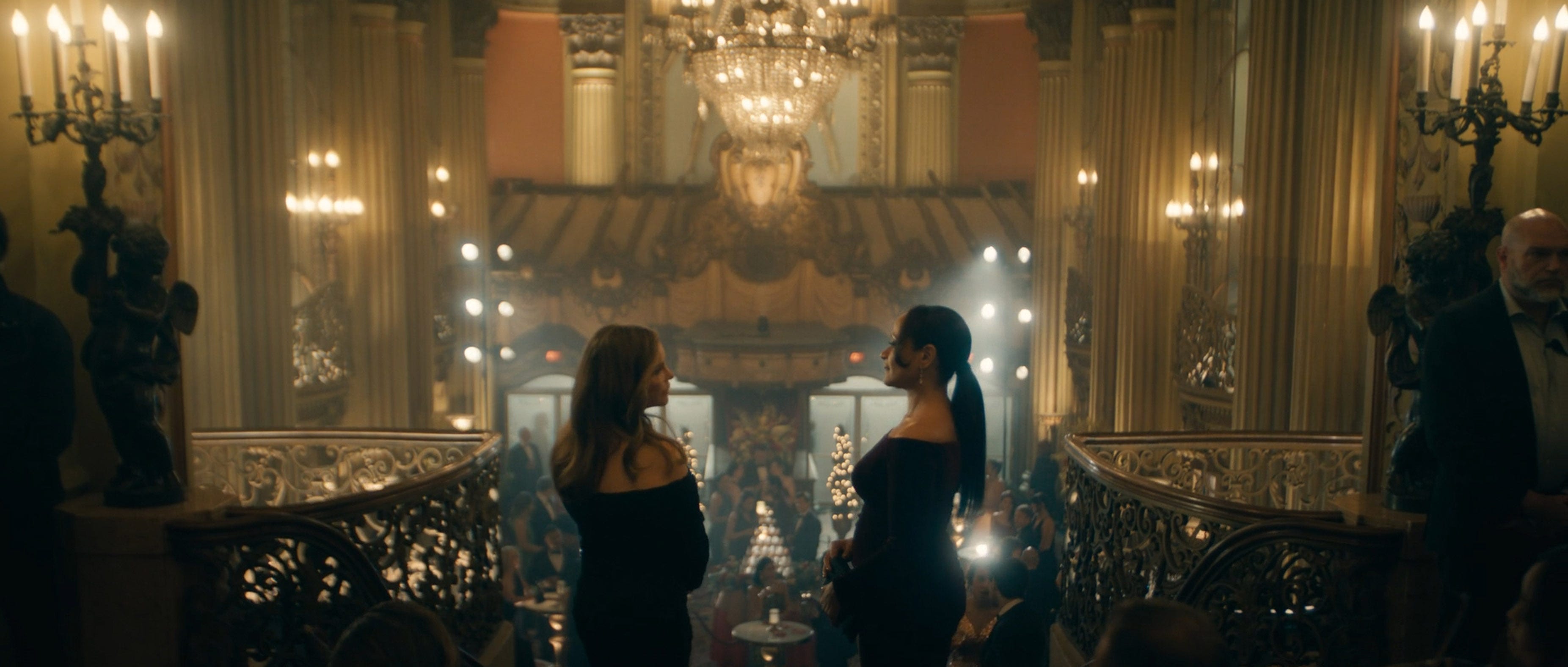
My co-DP Amanda Treyz and I worked very hard together to build our lens package and camera package and look. Nancy, the producing director, was also a great collaborator. She would organize these Morgan Vision meetings, where outside of the normal production of the show, we would also have brainstorming sessions where she would bring together our directors and our department heads, like our production designer, Valerie Green, and special effects people and everything. We’d have a brainstorming session, then an executing session where we would be like, “how can we make these Morgan Visions done practically, while also making them original and interesting?”
All ideas were welcome on the table. We shot with a thermal camera for one vision. Amanda did one on eight millimeter film. We would shoot with anamorphic lenses and all kinds of inventive stuff. It was truly a collaborative effort.
I mean, the whole show and movie making process is inherently collaborative. You can’t do it on your own and you want to invite everyone to bring their best efforts to the table because you’re working with all these people that are brilliant in their fields. If they’re bringing their best, it just elevates the entire show.
What would you say were some of the most fulfilling aspects of working on the show, “High Potential”?
It’s always a pleasure to get a script and read it. Then, when a scene is happening and everything’s moving, it’s amazing to be watching the monitor, and feel like I’m watching a movie at that moment. It’s the part where you transition from the analytical mind of watching what’s going on and technically breaking it down to losing yourself simply by watching the monitor because the performances are so strong. Those are parts of my job I live for, and that feeling happened multiple times for me while working on “High Potential”.
One of the scenes I remember is one of the romantic ones between Kaitlin and Steve Howey. They almost kissed in the beach house, and it was very low light. There were the lights of boats in the background out of focus, and it was just a beautifully lit scene that nicely emphasized the emotions that they were struggling with at that moment. So I thought that was fantastic to be a part of.
There was another moment we call the takedown, where they confront the criminal and tell them how they caught them. There was an episode where a woman had murdered her astronaut husband to preserve his work, because he was dying of a terminal disease. I thought that it was just a very emotional moment to see her admit to her crime and break down, even though she felt she had done what she needed to do to preserve his life’s work as he was dying. Scenes like that just really stick with me.
Even though I enjoy the process of pulling off something technically complicated, which is satisfying in its own way, those emotional moments are really why I got into this business.
“High Potential” and “Blue Mountain State” are two fundamentally different shows on a variety of levels. How did your way of approaching those projects differ if at all? Were there things that you were able to take from previous projects and apply to the newest season of “High Potential”?
Something I’ve always prided myself on is my flexibility. I’ve filmed all kinds of things over the course of my career. I’ve done drama, comedy, documentaries. I’ve filmed in the Folsom prison’s maximum security ward, and I’ve shot a comedy show on a football field in a corn field with a secret marijuana farm hidden in it.
The beginning is always the story, understanding the characters and figuring out for each specific project what the best ways are to use cameras and lights to enhance and communicate the story that’s there on the script and to capture the actor’s performances. That’s the basis of everything regardless of whether it’s comedy or drama.
Beyond that, I have little rules that I follow. But they’re not hard and fast. For example, I sometimes say that comedy is clean and drama is dirty. What I mean by that is like often in the more comedic moments, you might want to get the camera closer and not have a piece of the other person’s shoulder in the foreground, which helps editing because of this improvisation, you don’t have to match and things like that.
Whereas with drama, you really want to enhance that connection. So you maybe want to fall back and have the person’s shoulder in the foreground so you feel the closeness of them in the frame. Even in the close-up you may want that as well.
But these tonal differences from a shooting perspective are not necessarily a show to show difference, because I think every show I’ve worked on has comedic and dramatic moments. That’s true of “Blue Mountain State”, and that’s true of “High Potential”. The balance of those two things tonally is what keeps all shows interesting.
What would you say are some of your future goals that you’re hoping to achieve?
I would happily return for more “High Potential”. It’s an ambitious show to shoot and a talented group of people. I’d love to work with everyone again. Other than that, I always enjoy doing features and I do those sort of in between when I have open spots between TV shows. Some of those projects are just exciting opportunities to experiment and do something different. I really enjoy shooting science fiction, so anytime I get an opportunity to shoot a sci-fi film I go for it. I did this one called “Ultrasound” that’s sort of like a layered reality story with hypnosis as the basis. That played at Tribeca a few years ago. So yeah, I wouldn’t mind picking up a couple of indie features or a bigger feature and then keep doing TV and alternate between those two to keep things interesting.
What would you say are your biggest pieces of advice for people who are trying to break into the entertainment industry?
I would say that two things I think make the biggest difference in terms of pursuing this career.
Number one is persistence. Be stubborn and keep on trying through challenging times because we all have times where it seems like nothing’s happening and then suddenly we’ll get a call out of the blue and all of a sudden we’ve got a job. So being able to hold the line through those tough moments and survive through them until you get that opportunity is important.
And then, you know, another aspect is just to be kind to everyone and be as collaborative and friendly as possible because during the filmmaking process we’re all a group of dreamers, ultimately. Everyone wants to make something and everyone you’re working with, they may be a PA, they may be a crafty person, they could be anything. But they also could be writing their own script or preparing their own show. If you’re collaborative and open with everyone, you could meet them further down their career and suddenly they’re hiring you because they remember how good it was to work with you. So I think above all else, keeping a positive and collaborative spirit is a very important aspect of your career.
Mathew, thank you very much for your time today! It was an absolute pleasure getting to learn about your creative process, and the world of cinematography. Be sure to check out the show “High Potential” on Hulu and Disney+ when you get a chance!
And just be kind to everyone, because we are dreamers. Love it.
So refreshing to read about the joy of doing work you love and the art of collaboration. The added bonus: actual shooting and production in LA. More of this, please.